Our Archive

Blog Archives

Dropinceo > Blog >

CEO’s that gloss over mentorship realize corporate destabilization due to poor performance and retention challenges. Why does leadership invest so much in bringing in great talent to leave it unmanaged and wither with time? When we buy a car we’re better at changing the oil and rotating the tires. Why not have the same discipline with our resources who are the engine that run the organization?

I asked my mentor, what do I need to get ahead in my career and they said “Get an MBA.” At that time, I was busy with a career, three kids and doing the best I could to deliver results.  Who at the time could manage another degree? In retrospect, they could have advised how an MBA might enable me to have a greater impact on the organization. I’m sure it would have been helpful, but without proper mentorship even if I did get the MBA, I might not have reached my potential. Without that guidance, even if I got the MBA, I may have failed to reach my fullest potential. This is an example of poor mentorship and why I’m forever speaking to you about how important it is.

Let me break it down to the essentials so you can launch your own mentoring initiative:

  • Pair trained leaders to meet monthly with each of their staff. It may not be their boss
  • Focus first on the essential skills / barriers to improve core competencies and unleash their potential
  • Focus on the strategic work and evolve their thoughts on approach and progress
  • Focus on the tactical and what barriers are needed to be removed
  • Be present and really listen to the person and what are the underlying concerns
  • See them for who they should be or already are that they cannot see. Bring forward insight so they can see themselves in a new or different or higher light. When we can help them see their potential, they rise above.

You don’t need an expensive consultant to help implement such an effort. You as a leader can easily explain to your team why this is important and the measurable impact you are expecting. Then hold your teams accountable for this process just like you would manage any other Key Performance Indicator (KPI) in your organization. The mindset shift is that we are in the business of performance management. When we close gaps in confidence, capability and capacity, the results for stakeholders will follow.

For the unfiltered, off the cuff discussion about this topic, please listen to my podcast airing on 1/12/24 and view the video so you see how I really feel about this topic!.

I’ll leave you with one more closing thought:

Without effective mentorship, you are building a business on a shaky foundation of talent that may have gaps / cracks that you will notice when the planets align against you.

If you are a CEO who would love a partner to help you with a business challenge, be your #2 or help develop the team of tomorrow, let us partner in 2024.

To hear more about This topic please tune into my podcast that is releasing this Friday 1/12/24

Be well-Deb

Read More

If you fell short of your Productivity Improvements in your organization in 2023, do not repeat the same approach!

If you were wildly successful in achieving your productivity results, high five and I’m right there with you! However, I do ask you if you think the efforts are sustainable? I see leaders claim victory one year to only fall into the abyss of waste and destabilization because they’ve not secured a solid foundation for apparent improvements. Might it have been brute force but with little adoption,lack of forums to remove barriers or even assure the legacy of good work is ingrained in future generations of personnel?

While you ponder these thoughts, let me share with you as building blocks to shore up good work and enable you to sustain the results. If you did not do any of these things, there is no shame in going back and revisiting these foundational elements. The only shame is to not do this and watch great work crumble.

I’m an expert in this area as I helped build a Lean Organization that started out at $500k / year cost savings to sustainably yielding $5MM annually. It was brute force in the beginning to build the capability, buy-in and enable results. It is often a tactical implementation without strategic vision and I’m here to share with you wisdom that is invaluable:

To sustain the gains of a Lean Initiative, we must build Lean Teams.

While investing in a well-being regiment including a good diet, weight training, cardio and a positive mindset is all important in building a lean body, building Lean Teams takes the same investment. A sound body and a sound mind will sustainably give you good results and longevity.

START HERE:

Build a Servant Leadership Culture: Every conversation should start with how is this going to help the people doing the work? It should never start with what are going to do to achieve $100,000 in cost savings. It should start with what do we need to do to help the people to eliminate waste and make their job easier? What is the investment needed and what do we think the ROI will be. When we start with service, the results will follow. When we start with the results, you will fail to serve.

Make Small Sustainable changes. Despite good intentions and excellent training on Lean Methodology, only 20% will truly retain the knowledge. Develop an implementation timeline that enables understanding and WIFM (what’s in it for me) and develop confidence and capability first by measuring organizational maturity. Only when we achieve each maturity level, do we progress to the next level. Let the organization dictate the timeline vs. pushing through an artificial one based on results. Lack of adoption will destabilize the organization.

Lean Communications (efficiency & kindness) : learn discipline in how we communicate in an efficient and kind manner will yield faster responses when time is critical. It’s important to teach this to our people else, the waste of excessive emails and meetings will take over any speed you were hoping for.

Misunderstandings need to be met head on: Any initiative needs a forum to identify risks and escalate barriers. Without this pressure relief valve, frustration will simmer below the surface and blindside you when you don’t get the expected result. Also challenge yourself to ask the hard question: do your people feel safe enough to escalate issues. This speaks to your culture and a bigger issue than any Lean Initiative.

Showcasing achievements builds pride and anchors the work – while it’s often built into Lean Initiatives to parade the results to senior leadership like a royal event, we lose sight of what is important. Showcasing value is not for the leadership, but it’s for the people. The outcome is to instill a sense of pride for an accomplishment such that they’re encouraged to repeat the effort and be an advocate to amplify the Lean Initiative for future generations.

When we invest in building a Lean Team, not only do we get short term results; we achieve long term health and well being in the organization to sustain productivity improvements.

So there you have it, the key to optimizing 2024 productivity improvements.

I’m here to listen and perhaps we can have a conversation about how I can get you off on the right foot for 2024 improvements.

If this episode or this year has been valuable, follow me into 2024.

If you are a CEO who would love a partner to help you with a business challenge, be your #2 or help develop the team of tomorrow, let us partner in 2024.

To hear more about This topic please tune into my podcast that is releasing this Friday 1/5/24

Be well-Deb

Read More

The year is coming to a close and your fate has been sealed. It often feels anti-climactic as you then have to ramp up to a new year of setting goals and “Hoping” you can achieve them or get that new role. Stop hoping and start “Owning” your future!

As you can see, I’m nudging you a bit to make sure you don’t get stuck. Within the last month, two people came to me who have expressed frustration in their current situation and through some active listening on my part, reframing back to them what I saw as their value and some self awareness on their part, they came to the conclusion that they can see the future and take control. Something magical happens when I speak with people, but until we speak, I’d like to impart a few thoughts with you.

Reflect on all the value  you have brought in 2023 and use that data to predict your future performance:

  • Can people see your future potential?
  • Can you tell stories to show how past data and performance is a predictor of future performance?
  • Do you know what words or phrases to use to project your value?

And let’s ask yourself another set of questions about the future:

  • Can you see the future?
  • Can you see yourself in a new role or project?
  • Can you see yourself at the next level?

When you can see the future, articulate the future and act like your future self, you will get pulled into opportunities either of your own doing or external factors.

When you see the future, you can identify the barriers or actions needed to be addressed in order to move forward. If you’re in a situation that you cannot control the environment, then it’s time to move to a different environment where you will thrive. No shame in moving on, but regret if you stay put.

I can help you whiteboard your thoughts and future state and close the gap on the current and future state. It’s that easy and the only thing standing in the way of your successful 2024 is your decision to work with someone.

I know this was a bit of a pep talk vs. a framework, but it’s actually simple. You can do this on your own or you can make the decision to work with someone like myself, a mentor or a trusted partner. Regardless of who you work with, move yourself to action.

If this was helpful, let me know!

If someone could benefit from this DIY lesson, please share it with them!

If you need some help, I’m here for you.

I’m here to listen and perhaps we can have a conversation and unlock your future!

To hear more about This topic and goal setting for 2024, please tune into my podcast that is releasing this Friday 12/29/23.

Be well

-Deb

Read More

I want to congratulate you on an absolutely amazing year! You met all your target objectives, got a promotion and you found balance in both your work and personal life! Congratulations!

I know I’ve had a great year for me and I’m sharing with you a festive moment with my husband Dan who has seen me through the ups and downs and hopefully a lot more ups!

If this is you, I’m so grateful for your good fortune and I’d love for you to share with me what went well. It’s important to celebrate your “High Five” with others!

If you’re looking around the room for who might I be speaking to, again, I’m speaking to you! This could have been a year to celebrate, but instead things just happened. You didn’t meet your objectives, you have uncertainty about the future and you’re not sure how to get back on track. I hope this is only a few of you, but if this is you, I’m here to impart a few things to get you on the right track. If it was helpful, might you share if this advice worked and perhaps we can connect!

Here are three things you need to do to set your personal forecast for a winning year:

  • Reflect on what went well and what would you Continue?
  • What would you Start doing to enhance what is working well?
  • What would you Change that could detract from what is going well?

While this is the same framework I use for giving or soliciting feedback; it is rooted in receiving external validation from others. I want you to look inside and ask yourself these questions; there is great power in creating self awareness and what will you do with this information.

As always, to help you to make this actionable, I’ll go first with some of my self feedback:

  • Continue: Leveraging my voice, investing in myself and my reach and well being- it’s been a winning combination and I will continue it this year. My clients and audience have confirmed these have served them well when we engage with each other.
  • Start: Video Strategy to reach all demographics where they’re at in the way they want to consume information. I write on LI and my website, I have a podcast that gets into your ear. I am now moving the podcast content into the YouTube. This will hopefully reach more of you and provide the value you want in visual form.
  • Change: Limit how much I work and focus only on the needle movers. Move away from distractions and it might even mean disappointing a few people. Forgive me in advance as I’m now laser focused on the most important things.

I really want you to succeed with this process, so I’m going to provide you an example that could be relevant to your situation:

  • Continue: I will continue to build up new skills / certifications to build my technical capability in my role. I will invest in my future
  • Start: I will practice telling stories when trying to communicate a message or a proposal. My technical skills are sound. Now I want to be influential through story-telling.
  • Change: I will not worry about trying to pull people along who are not on board with my initiatives. It wastes my time and energy. Instead, I’ll create a dashboard showing progress across all teams and where others are not performing it will be visible and they’ll have to change based on the visual pressure they will receive. Let the collective pull them along vs. myself carrying the burden.

So there you have it, three simple steps you can take to create and forecast a winning 2024.

I’m here to listen and perhaps we can have a conversation and unlock your future!

If this article or this year of connection has been valuable, follow me into 2024.

If you are a CEO who would love a partner to help you with a business challenge, be your #2 or help develop the team of tomorrow, let us partner in 2024.

To hear more about This topic please tune into my podcast that is releasing this Friday 12/29/23.

Be well

-Deb

Read More

After you’ve taken inventory of your own self assessment, what stories can you tell others about the value you bring? This is the time to build up your arsenal of stories for your next role within the company or that next opportunity.

Resumes are boring and hardly articulate your value!

In a fast paced environment, hiring people need a quick way to put you in the yes/maybe/no pile to identify talent.

Assuming you’ve had some expert support to put in keywords to land you in the Yes pile, the challenge becomes how to articulate your value.

So many of you have come across my doorstep and shared with me your accomplishments, but few know how to articulate your value and even better in the context of storytelling.

The outcome of your pursuit will die at “Tell me about yourself” unless you’ve honed this skill.

I’m vested in your success as you reflect on your 2023 accomplishments and craft a message in pursuit of a new role, promotion or job so stick with me for a few more minutes.

Examples of data-based storytelling:

“I was able to impact $100,000 savings to the bottom line.”

Every other resume says that, but you are not your resume. You need to stand out. For every accomplishment like the $100,000 cost savings you need to learn to follow the Hero’s journey to tell the story and draw people into your value.

Value is created by knowing how to message what you did and the impact with the storytelling being the way to connect with humanity.

Here is an example of bad, better and best for implementing a new initiative that you successful led:

  • Bad: I was responsible for implementing a $100,000 cost savings initiative in 6 months.
  • Better: I was responsible for implementing a $100,000 savings initiative by leveraging good change management, engaging with others and ensuring stakeholders were informed and leveraged during the 6 month event.
  • Best: I was challenged with a $100,000 cost savings initiative in 6 months. Knowing it was a challenging task, I had to spend some time reflecting on how I would make this easy to adopt and maximize sustainable impact. I remember going to one plant manager who was often an early adopter. I tried a new way to message the initiative and how to customize it to his needs. He looked at my proposal and said he loved how I visually represented it so he could buy into it. We later tweaked the proposal based on his input and we moved forward. When I spoke about it at the next leadership meeting, he was quick  to share the value of the approach for which others then jumped in and spawned discussion. Had I not done this, I would have delivered the initiative with either crickets responding and hope I’d get compliance or possibly deflection and why we could not have done that. Through finding early adopters and collaborating together, I found the path forward to get the result and impact needed.

Do you see the difference? It takes practice, but this is what sets you apart and positions you for that next role, position or project.

If this was helpful, let me know, or if someone could benefit from this DIY lesson, please share it with them!

If you need some help, I’m here for you.

I’m here to listen and perhaps we can have a conversation and unlock your future!

To hear more about This topic please tune into my podcast that is releasing this Friday 12/15/23.

Be well

-Deb

Read More

It was 2017 when I felt completely lost in how to change the future in my organization which was doing poorly when I arrived. This had been one of the most daunting challenges I had taken on. My region was in last place and needed to find a way forward. Working harder and applying more resources would get me short term results, but wasn’t sustainable. Does this resonate with you? I share this insight often because the leader’s conundrum is to get results, but they often are not rewarded for taking a pause to find a new path forward or envision and manifest the future.

That is why I created a “crystal ball” for unlocking your future career path. It’s called the “whiteboard” both physically and figuratively, but simply a place to project your thoughts. It could be post-it notes, Miro Boards, Journal, Powerpoint or any space you feel comfortable putting down your thoughts.

What is different from most “Planning” frameworks is there is no structure to this. Simply put random thoughts on the “whiteboard” and don’t worry if they have meaning.

To enable the creative process, you might want to ask yourself such questions as:

  1. What is missing?
  2. What is needed?
  3. What is working well?
  4. What type of leader am I?
  5. What type of leader do I want to or need to be?
  6. How do I feel?
  7. What does the team need?
  8. What are my strengths and weaknesses?
  9. What are my team’s strengths and weaknesses?
  10. What do I see in my future?

These are simply prompts to put up random ideas with no structure. When we allow ourselves time to freely think with minimal structure, something interesting happens. What we want or what we “see” starts to show up on the board. Once they are documented, it is good to walk away  and come back later and look at them with a fresh set of eyes. Let the words / phrases speak to you and I promise the “whiteboard” is the crystal ball into the future. When you start to see common themes or connected concepts, they start to take shape and tell you what the future looks like and the actions needed.

Here are a few things that happened when I started to whiteboard:

  • The Framework of One came to me to enable me to unify my region
  • My purpose was to enable people to struggle less and spend more time doing the things they enjoy
  • My greatest gift to my team was to remove barriers and elevate their leadership to unleash their potential
  • Create a collaborative environment to amplify their impact
  • Leverage feedback continually as an accelerator for improving performance.

So what happened after I did this exercise? I went from the #4 out of 4 regions to #2 in 18 months! I created the future I wanted and enabled the team to perform to it’s highest potential. There were of course challenges along the way, but this vision and change in my leadership created the future I wanted for myself and others.

Even now, I have a whiteboard that is telling me to use my voice in ways I never imagined to support you and enable your fullest potential. It’s working for me and I want to give this approach to you.

Here’s your framework for creating your own crystal ball:

STEP 1: Find your whiteboard

STEP 2: Write down ideas, no framework, nothing, personal, professional, family, community, passion, strengths, goals, dreams… what you see, visualize it

STEP 3: Walk away

STEP 4: Return and add to it, step back and just assess, no goals

STEP 5: Go back to step 3 and walk away

STEP 6: Circle themes, start to make some sense of it, what are they saying about the future. Start summarizing what you are seeing

STEP 7: Go back to step 3 and walk away

STEP 8: Take some of the themes and put them into a plan / roadmap to explore or go in that direction with specific steps.

Do you have challenges with unlocking the future? Do you avoid leaning into seeing the future? Worse yet, are you a leader who has team members who lack these critical skills to create vision and a future worth pursuing? Let me partner with you. I’m here to listen and perhaps we can have a conversation and unlock your future!

To hear more about this topic please tune into my podcast that is releasing this Friday 11/24/23.

Would you rather have a quick 1-2-1 to discuss your specific challenge?

Could The Drop In CEO be your support system? Direct Message me on LI or contact me by schedule a short call and let’s have a conversation. Until then, I wish you much success.

Read More

You know, these days the word “pivot” gets thrown around a lot. It’s become quite overused! But let me tell you, having the courage to pivot can really be a game changer when it comes to your leadership.

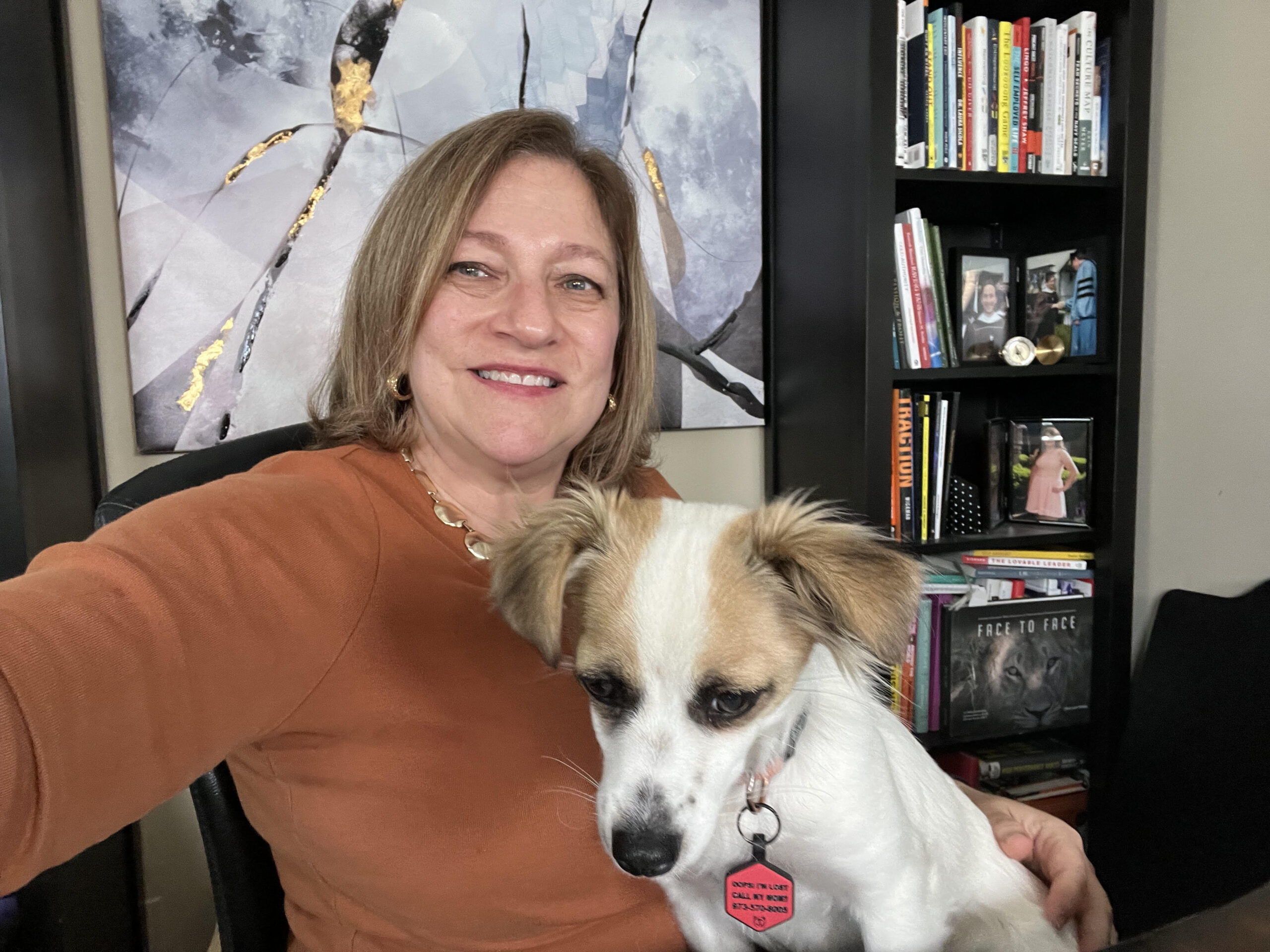
Let me share a personal story with you. My son David asked me if we could take care of his dog Gabbi, and just like that, we went from being empty-nesters to having a very energetic puppy in our lives. It completely shook up my routine, and at first, I resisted the change. But soon enough, I realized that this was my new reality. Gabbi forced me to get more focused on the things that really matter and eliminate any wasteful activity in my life. With her needing attention, I found myself taking more walks and pausing in my day to prevent any chaos that might ensue if she gets bored or ignored. This shift gave me more time to reflect on the quality of my life and what truly matters.

During this time of reflection, I made some important decisions. I put off writing my book, took a break from redoing my website, and instead, I became laser-focused on my well-being, client work, and making meaningful connections. I also dove headfirst into developing a YouTube strategy to reach a wider audience. Let me tell you, I am so excited about these initiatives, and my team is on board too. Since shifting my focus, I’ve noticed that the stress I used to feel is slowly melting away, and new opportunities are starting to present themselves.

I’m sharing all of this with you because I’m genuinely thrilled about how I feel, and I want to help you feel the same way. I want you to feel energized and excited about what you do, for yourself, your friends, your family, and your community. I want you to find purpose in your work and make a real difference in the lives of others.

Recently, I had a client who was at a crossroad in their career. They were holding onto their current pursuits, but deep down, they knew they needed a change. That’s when they reached out to me for guidance. We carefully analyzed their needs, desires, and passions. Through our discussions, I proposed ways for them to realize their value and identify where they should apply it. It didn’t take long for them to recognize a different path that would lead to a more fulfilling life, both financially and in terms of purposeful work and life balance. When our engagement came to an end, they felt more confident than ever about the new direction they had taken.

I want this same sense of fulfillment and joy for all of you. I want you to have more fun and spend time doing the things you love. And most importantly, I want you to embrace the mindset that pivoting often can open up incredible possibilities and bring more joy into your life.

So, remember, when you have the courage to pivot, your C-Suite leadership skills will not only be recognized but will also bring you greater joy and satisfaction in your work.

Do you  have challenges with pivoting? Do you avoid leaning into pivoting? Worse yet, are you a leader who has team members who lack these critical skills? Let me partner with you. I’m here to listen and perhaps we can have a conversation.

To hear more about This topic please tune into my podcast that is releasing this Friday 11/17/23. 

Would you rather have a quick 1-2-1 to discuss your specific challenge? 

Could The Drop In CEO be your support system? Direct Message me on LI or contact me by schedule a short call and let’s have a conversation. Until then, I wish you much success. 

Read More

When an old boss of mine said to me “you shouldn’t have said that”, for the longest time, I went quiet in expressing my views. This happened, because my boss did not coach me on the “how” to say it or “when” to say it, just “you shouldn’t have said that”. The context of the conversation is not important, but I wonder how many professionals now avoid conflict for fear of saying the wrong thing. Anyone have that issue?

Given that few of us have coaches or mentors, where is the professional to go to for guidance on how to say things vs. what they say? And further, how we say things can influence the outcome of a situation for better or for worse. How many times do we say the sky is falling and we need to spend money to only have it fall on deaf ears. Could we teach our professionals to express positions with the context of risk or opportunity and what is the impact?

The boss who did not coach me on “how” to say something in a controversial situation; I took it very personally and took the road of being quiet. At the same time, it is because of this situation I also have him to thank because I’ve taken many years to hone my skills in “how” to say things. It is why I’m here today to guide you on a better way of influence, reduce stress and create a future you want.

Given one of the most frequent opportunities to practice how to say things vs. what to say are meetings. We often defer to the agenda or transaction vs. realizing we’re managing human interactions and preserving relationships.

They don’t teach that in school and after years of learning a better way, I want to share a framework with you to consider:

Framework for maintaining relationships and getting a better outcome: 

Step 1:

Think about the interaction you’re going to have. They fall into a few categories in increasing importance

Exchanging information: Usually of a nature to inform so they can do their work or documenting an agreement; not always needing a next step or Call to action

Call to action Often transactional and needing information or approval

Influence an outcome Such as a proposal to move from a current state of A to a future state of B

Step 2:

Exchanging information has been dehumanized for which people get frustrated for not getting the desired outcome. Here are two ways of approaching an exchange; the “what” and the “how”. I promise you the “how” will get you what you want: 

What you say “Here is the information you requested. Let me know If you need any further support.”

How you might say it better “Thank you for the opportunity to have a great conversation last week. Per our agreement, I’m sharing with you the information you requested to support your initiative. Wishing you success and please reach out to me if I can be of further service to you.”

Step 3:

Call to action is about moving forward, but how we say it can expedite the result: 

What you say I need your approval by close of business November 30th. I can be reached at this phone number if you have any questions.

How you might say it better I sincerely appreciate your time to evaluate this proposal per our meeting last week. In order to enable us to expedite our delivery on these services to you, we do need a response by November 30th. I am happy to review this with you in person or with your designee should you have any questions to enable your approval.

Step 4:

Influence an outcome: when buy in is critical and sometimes we have to connect with ones emotion vs. simply the problem at hand

What you say We’re at risk of not meeting our customer deadline if we don’t approve funds for the purchase of this test equipment.

How you might say it better Given the trend in customer complaints is increasing and we risk losing market share, I propose we consider the purchase of the test equipment by end of November in order to close the gap we currently have and rebuild customer trust.

Step 5:

Watch the magic unfold: I promise you that when you practice how you communicate, it will improve the outcome extending from maintaining or building relationships to streamlining proposals and people acting on what you need.

In summary, when you prioritize human interactions over the transaction, you get the outcome you are seeking. 

Do you have challenges in how to effect a better outcome? Do you avoid interaction because you haven’t been taught the skills? Worse yet, are you a leader who has team members who lack these critical skills? Let me partner with you. I’m here to listen and perhaps we can have a conversation.

To hear more about This topic please tune into my podcast that is releasing this Friday 11/10/23. 

Would you rather have a quick 1-2-1 to discuss your specific challenge? 

Could The Drop In CEO be your support system? Direct Message me on LI or contact me by schedule a short call and let’s have a conversation. Until then, I wish you much success. 

Read More

In a world of so much uncertainty, political tensions heightening and chaos unfolding in all parts of the world, it can be challenging to keep a positive attitude as you show up for yourself, family and colleagues each day.

I despise uncertainty and hence my superpower is “control” to deflect the unknown and uncomfortable throughout my day. And while that serves me well over the years, too much control over my interactions can lead to a perception of being a bit aloof and less engaged.

If you know me, that is not a persona I wish to show up with and I’ve found other tools in my toolbox to combat my need to control uncertainty is gratitude.

I find this to be the key to establishing quick rapport with people, easing the pace of transactional and also reminds us we’re all human and that is the only constant we can rely upon amidst all the world chaos.

When we lead with gratitude, it changes the dynamics and in all cases you get a positive outcome. This is the only thing I can be certain of and I want you to realize more positive interactions whether at home or at work.

These are my tried and true tips that have served me well and maintain human connection:

Step 1: Create a new mindset: Every interaction is an opportunity to express gratitude. If you lead with this approach, watch the magic unfold as you will see everyone else follow your lead!

Step 2: Meeting in person or Virtual: Thank the person for their time and meeting with you; it shows respect. If it’s a new person and you are uncertain about the interaction, this slows things down and allows some casual conversation to get to know each other.

Step 3: Write an email with human connection. Start with a thank you for their time to consider the proposal:

  • Thank you in advance for your time to review this need…
  • Thank you for providing the information and the value it brings…
  • Thank you for their quick response and how it helped you…
  • Thank you for that constructive feedback, I sincerely appreciate your thoughts…

It slows things down and pays respect to the person and how you value them

Never!!!! Start with the action like “I Need “x”. I know this may be contrary to some “Lean email” I told you about where you state the Ask & need in the first sentence. Pause and express gratitude and then get to the point.

Step 4: Texting: Same as email

I don’t prefer texting, but if Whatsapp / texting is a communication of choice for someone you are interacting with, the same goes for this. Start with a quick thank you; similar to email.

Step 5: Lead by example and coach others in the same.

If someone is struggling with getting people to respond, this bit of advice will help them immensely.

These tips are for you, but if you see someone struggling; sharing this kind feedback with them will lift them and elevate your interactions.

When we lead with gratitude, the universe will respond to you in kind!

Do you  have challenges in this world of uncertainty that you just need someone to talk to?  I’m here to listen and perhaps we can have a conversation.

Now is the time for you to collect your thoughts and take action. I want you to succeed and this framework can enable you to do it yourself.

However, if you need more help, I’m here for you as the Drop In CEO, CEO whisperer or as a sounding board.

To hear more about This topic please tune into my podcast that is releasing this Friday 11/3/23.

Would you rather have a quick 1-2-1 to discuss your specific challenge?

Could The Drop In CEO be your support system? Direct Message me on LI or contact me by schedule a short call and let’s have a conversation. Until then, I wish you much success.

Read More

When I was 35, I had my sights set on a promotion that I felt would change the trajectory of my career. Asking for a promotion or advocating for oneself is not just about the desired outcome, but also about confidently stating the value we bring and providing specific examples of how we have made a difference. It’s about being proactive, action-oriented, and not being afraid to ask for feedback or help when needed.

I was only successful because of my ability to advocate for myself, utilizing my support system and the resources available to me.

The next time you’re facing a challenge, here are a few tips to remember:

  • Reflect on your value and address any gaps in performance. Take proactive steps to solicit feedback and showcase your contributions to the organization. Self-advocacy is a sign of true leadership.
  • Be confident and assertive when discussing your goals and aspirations. Clearly communicate what you want from the conversation and set the tone for a productive discussion.
  • Don’t be afraid to seek help and guidance. Reach out to mentors, colleagues, or professionals who can provide valuable insights and support in your self-advocacy journey.

Remember, reflect on your value, clearly communicate your goals, and seek support when necessary. With these tips, you can effectively advocate for yourself and achieve the success you deserve.

If you are aspiring to the C-Suite, and tired of the hustle, are you ready to change how you work and implement these tips? 

If you are a business owner or C-Suite leader, are you ready to invest in your people and help them be successful? Their success is your success! 

Now is the time for you to collect your thoughts and take action. I want you to succeed and this framework can enable you to do it yourself. 

However, if you need more help, I’m here for you as the Drop In CEO, CEO whisperer or as a sounding board. 

To hear more about my upcoming book, please tune into my podcast that is releasing this Friday 10/13/23. 

Would you rather have a quick 1-2-1 to discuss your specific challenge? Could The Drop In CEO be your support system? Direct Message me on LI or contact me by schedule a short call and let’s have a conversation. Until then, I wish you much success. 

Read More