Our Archive

Blog Archives

Dropinceo > Blog >

You have an outstanding resume. You land multiple interviews. And yet somehow, the offers just don’t come through. You’re celebrated as the subject matter expert, but when a new job opens up at work, you’re not even considered. You’re not alone. This scenario plays out day after day amongst highly talented professionals, and causes them to question their capability and lose their confidence.

This isn’t a skills problem, this is a pitch problem. Society teaches us to present information first and ourselves second. Even if you learn the finer points of moving forward proposals or initiatives, you’re still not recognized as the person who is next in line for a promotion. The challenge becomes being so good at our jobs that people want to keep us in these critical roles. While we can fall into the abyss of being a victim of circumstances, I seek to provide you with some tips to help you take control of your career.

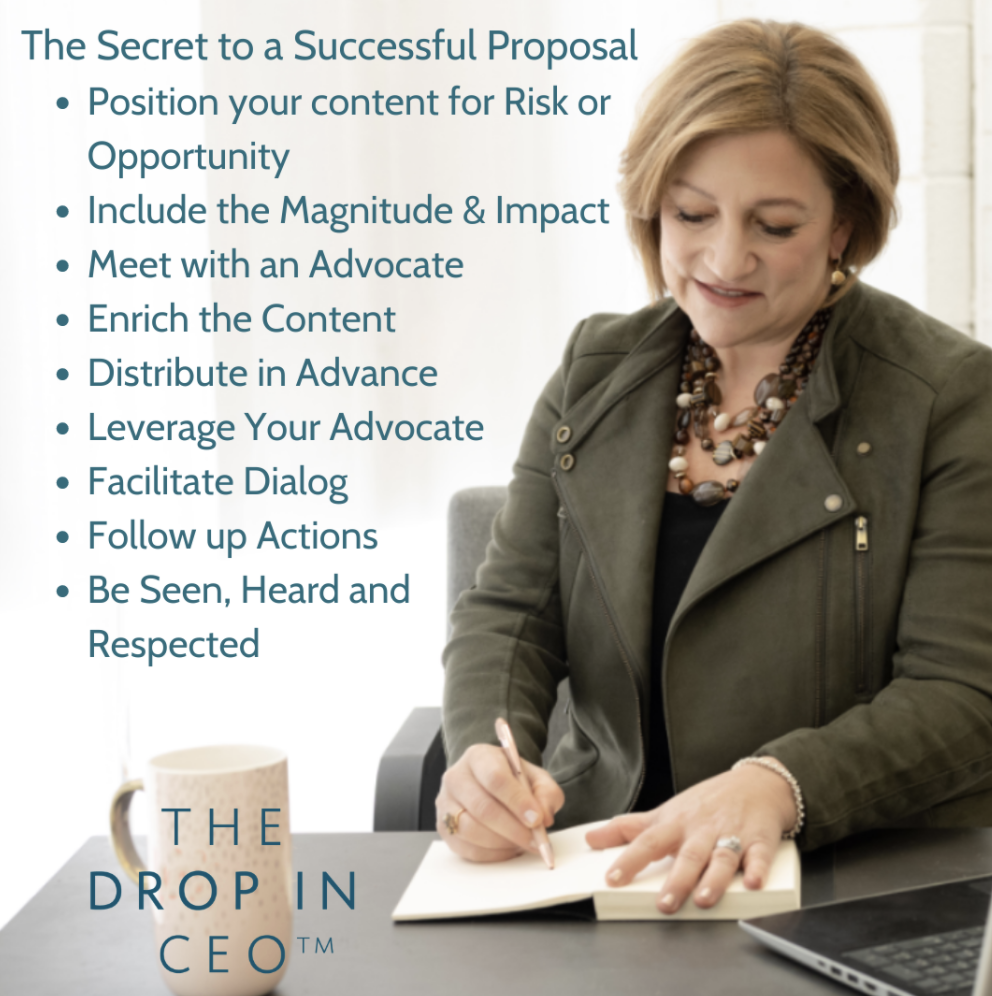
Mind Map Your Personal Pitch in 5 minutes

We need to get out of the box that people put us in. You may be a Compliance Manager, a Senior Customer Service Representative or a Senior Director of Operations and people know what those roles are. You are judged on your deliverables against a job description and often without points for creativity. What I propose is for you to go outside the boundaries of a job description and answer a few simple questions about what makes you different. This will help you to position yourself to get a better result in terms of career advancement.

Write down words & phrases that come to mind: 

  • What am I known for in terms of my technical skills?
  • What other skills do I have that I’m really good at?
  • What do I do better than everyone else?
  • What have other people said about me in passing that I’m good at?
  • What am I really good at outside of work and celebrated for it?

Next, circle things that are related to each other to see relationships that showcase your uniqueness.

For those items where there are unique qualities, are there other industries or jobs that celebrate these skills, but maybe use different words to describe them?

Here’s an example for me: 

Problem Solver, Cut Through the Chaos, Crisis Management, Speaking, Listening, Facilitating Conversation, Soothing Voice, Organizer

I happen to love music and think of an Orchestra & Symphony as ways of bringing different groups together and blending them into something that is beautiful & productive – so I think of this as building relationships amongst disjointed sounds or activity.

I could now consider myself as:

  • The Conductor of Crisis Mitigation
  • The Orchestrator of a Problem Solving Culture
  • The Drummer of Project Management

I know these might feel uncomfortable at first, but think about it; what if you come out and say: “I’m the Conductor of Crisis Mitigation. I drop into situations and can quickly assess the landscape and bring a crisis into control while maintaining customer relationships.” Enrich this pitch with your experience and you will stand out in a noisy field of other experts!

Sound easy? Give it a try! However, I find these mind mapping activities are sometimes best when bouncing ideas off of someone else. You need to give yourself the freedom of free flowing thinking as you explore these questions for yourself. Finding your personal pitch can be the difference between being simply the expert and having the stand out persona that people talk about. 

I offer a 30 minute complimentary consultation to discuss your unique situation because I simply want to help you and others struggle less. I want everyone who is aware they need to try something new to struggle less and achieve their career goals.
No alt text provided for this image

For more information about The Drop In C-Suite Academy (CS)  dedicated to the aspiring C-Suite leader, simply register to get on the waitlistemail me or connect with me for a quick chat. I can’t wait to help you be successful and reach your goals!

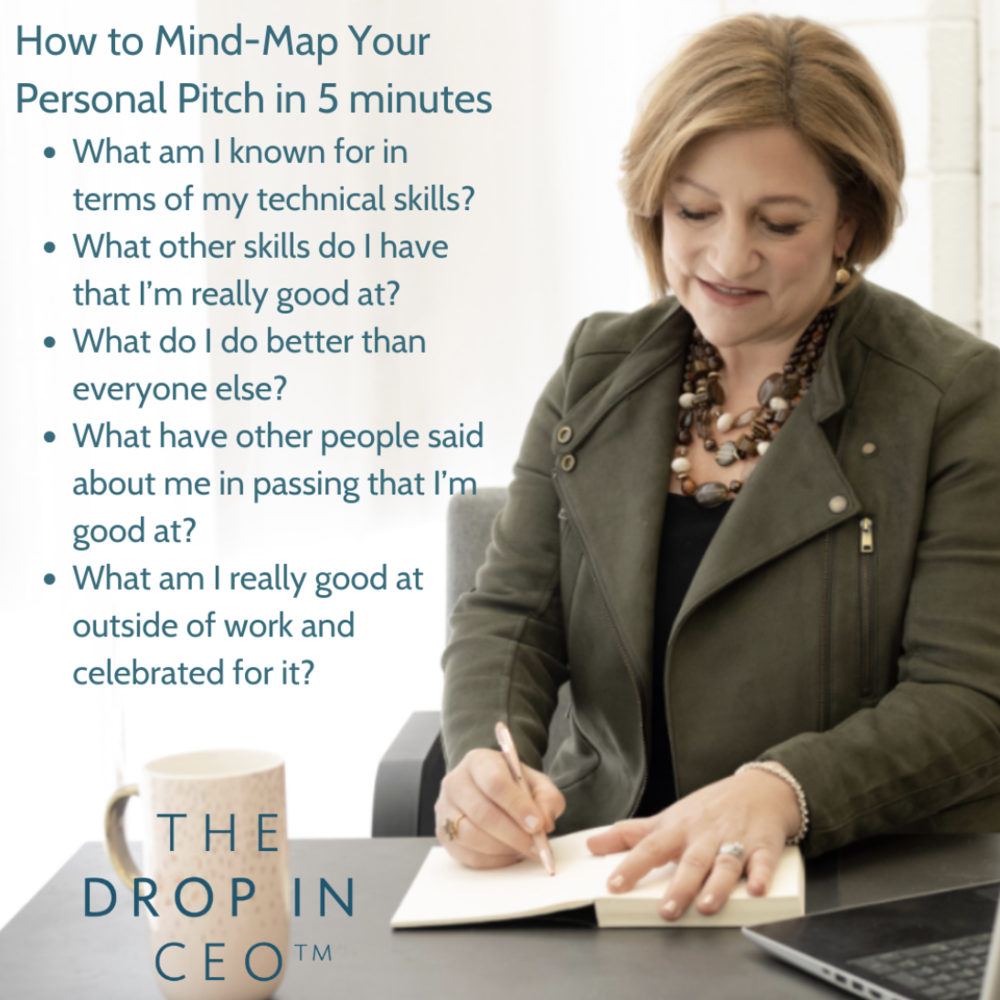
For more resources, you can listen to The Drop In CEO Podcast or check out my book The CEO’s Compass will help you get on track in days not months. 
No alt text provided for this image

Resources

Good Reads

This week, I’m filling my suitcase with books that have been on my shelf that I’ve been meaning to read. I’ve been so busy creating content that it’s hard to take in new content. While on vacation, I plan to fill my mind with new thoughts and hope to share them with you when I return. 

Good Music

Ludovico Einaudi – I Giorni:

I’ve been feeling a little overwhelmed, a touch sad as well as exhilarated for vacation coming up. This music embraces all of these emotions, but ultimately brings you to a place of hope that everything will be just fine. All of these emotions are what makes the human element exciting. I do hope you enjoy this piece. 

Good Advice

While my post is about standing out; please know don’t go it alone. We are better because of leveraging the community of supporters and guides to help us to reach our fullest potential. My guest on this week’s podcast had these words of wisdom to share: 

“We idolize the individual as the unit of being, right? …but if we think of ourselves as social organizations we would think more collaboratively and inclusively.” 

–Mark Monchek

Listen and subscribe now

P.S. If you love the podcast, please write a review. Not sure how? We’ve created a quick tutorial to make it easy.

Read More

One of the biggest frustrations I see in a corporate setting is when great work never gets implemented fully because of poor change management. New and innovative ideas are often overlooked because we rarely give our subject matter experts the framework to socializing their proposal to get buy-in. This is the pain point we need to address to evolve the capability of our experts. 

I call this the SME Conundrum; the Subject Matter Expert who is celebrated for their expertise, but then falls short because we’ve never developed them beyond their area of expertise. They have gotten ahead because of their expertise, but no one has taught them how to socialize to get buy-in and move it forward. This is often necessary in a cross-functional environment and tiers of stakeholders who need to be consulted. When we don’t develop these skills in our SMEs, they lose their confidence and become a quiet contributor vs. your next stand out C-Suite Leader. 

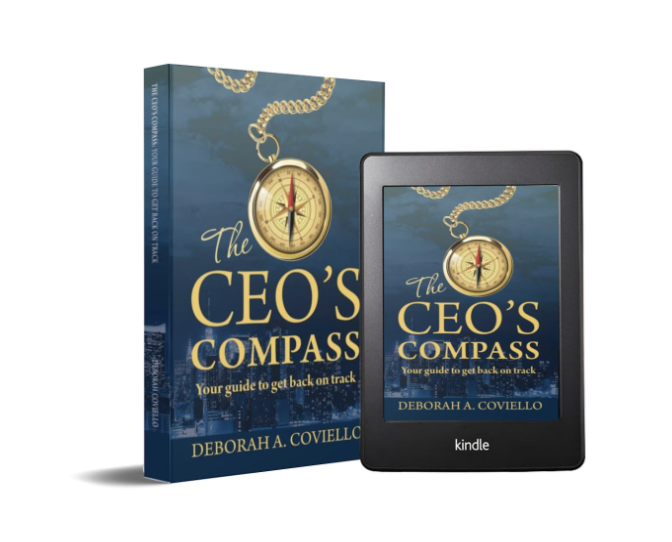
The Framework to Socialize a Proposal for Buy-In

In a large corporation, I was required to cascade a new initiative through our plant managers and I knew it would be an uphill battle. With so many initiatives happening at once, how was I going to layer on another? Instead of facing glazed eyes and courteous deflection I positioned it in a way that used their language, their pain points and how they could benefit from the work. Once they understood the potential value along with my commitment to partner with them, they soon provided feedback on how it could work. With an evolved framework that made sense to them, I shared it with our senior leadership committee and was able to get it through. The success came because I had socialized in advance with either an advocate (or critic) to evolve how it could work.

Often, when new ideas are presented, leaders may deflect or simply defer because no one wants to go first in approving it. With an advocate in the room who can speak to the benefit, silence or deflection becomes constructive conversation. It then evolves from there and even if there are gaps still to be closed you are seen, heard and respected for facilitating constructive dialog.

In the end, I was able to move the initiative through all the plants. But, it took hard work, not because of the technical details of the initiative. Implementation comes easy. It is the socialization of meeting with stakeholders in advance that is the hard work; but necessary to have a smoother and faster implementation.

Sounds easy? Well, it can be with a framework for which I’m providing a simple tip sheet below: 

No alt text provided for this image

To hear the rest of the story and details around this process, listen to my upcoming podcast episode which airs Friday April 1st. Here you will hear more of my secrets to a successful proposal.

  • Do you have the skills to try this on your next proposal? 
  • Do you know someone on your team or in other areas of the business that can benefit from learning these tips to be more effective as a leader?
  • Would you like to talk to someone about these challenges and glean a few more tips? 

I offer a 30 minute complimentary consultation to discuss your unique situation because I simply want to help you and others struggle less. I want everyone who is aware they need to try something new to struggle less and achieve their career goals. 

For more information about The Drop In C-Suite Academy (CS)  dedicated to the aspiring C-Suite leader, simply register to get on the waitlistemail me or connect with me for a quick chat. I can’t wait to help you be successful and reach your goals!

For more resources, you can listen to The Drop In CEO Podcast or check out my book The CEO’s Compass will help you get on track in days not months. 

No alt text provided for this image

Resources

Good Reads

Courageous Cultures: How to Build Teams of Micro-Innovators, Problem Solvers, and Customer Advocates by Karin Hurt. Karin was my podcast guest this week and her unique perspective to change how you approach problems and move teams is amazing. Please check out her book and also our podcast interview this week to learn more. 

Good Music

Soundcritters – Heroic Opportunities – I do hope you listen to this piece if you are an aspiring C-Suite leader who has the right mindset and is seeking the path towards that goal. This is very inspirational as it pushes you forward once you have set your mind to invest in yourself and personal development. 

Good Advice

So often we wish our bosses could be different. We often wish to achieve the next level; you’re a supervisor and want to be a manager. However, you can be the person now. You can be who you would want your boss to be. The only thing holding you back is yourself. Start being the boss you want to be remembered by and soon people will gravitate towards you because you are becoming a leader. When you behave like a leader, you become that leader. The title is simply the recognition. 

 “Be the leader you want your boss to be.” 

–Karin Hurt

Listen and subscribe now

Read More

If I had a dollar for every time my husband said I could do something and I said “I can’t do that,” I’d be a very rich person by now! Until I realized my mindset was the only thing standing in my way of my full potential, I lived a less than purposeful life. I can’t help but wonder how many millions of people l work with each day believing they are fulfilled and then wake up one day feeling that time is running out and what can they do to change things. 

If you’ve ever doubted your abilities or skills, today is the day all that can change for you.

When we are born, we yell loud for our basic needs to be met and get what we want … most of the time. As a child, we swing high to reach the sky without fear, we fall, we get hurt and we jump right up and do it again. We put our stake in the ground and say I’m going work in the police force or become an artist and then look back and wonder what could have been. I’ve found that somewhere along the way, we lose our confidence and settle into mindsets that hold us back. It’s up to us to become aware of that cycle and break it. A Forbes article shares that almost 90% of people have negative self talk. A daunting statistic we must overcome.

Get rid of the “n’t” in your vocabulary.

When we say I can’t, I won’t, I’ve never… we affirm the narrative that we are limited. When we change our language and say I can, I will, I’ll try… we move in the right direction. Try that one at home and if not yourself, see how often a colleague uses such language. You may be the one to short circuit the negative mindset that was adopted.

If you’ve been meaning to make a change in your career, but dwell in the problem state such as: “I can’t apply for that job because I don’t have the right experience,” I propose a different approach. Rather than stating a problem, reframe it as an opportunity. A good framework can be using the 5W’s: Who, What, Where, When and Why. Reframe the problem as an opportunity and you’ll start to shift your mindset.

Let’s try this: “I want a new role that leverages my leadership skills in a new industry by September 2022 because it will be fulfilling work and I’ll grow because of the change.”  Now this is a positive mindset even though you were concerned about your skills matching what someone else said is required. Starting from a place of opportunity will move you in the right direction. 

Use SMART statements.

There is one more piece to an opportunity statement and leverages an old favorite of mine – the SMART statement (Specific, Measurable, Actionable, Relevant, Time-bound). The reason why I like to leverage this in addition to the Opportunity Statement is because it adds the dimension of “Actionable.” You can have the best opportunity statement, but lack the actions needed to take control of your situation. Write down 3-5 steps you can take right now to take your opportunity statement forward. You’ll soon see what started out as a negative mindset holding you back has moved into an actionable opportunity that leverages your skills.

Sounds easy? It really is, but until you have a framework and someone to talk you through it (wink, wink!), it can be hard to get started. I see so much talent in the world such as yourself and I see it wasted because you’ve not been given the support you need to evolve a positive mindset. It is my mission to help you and those that may be holding themselves back. 

If you’ve come to the end of this article and you understand because you have a positive mindset, I do appreciate you staying with me to the end. However, if you know someone who could use that support in your network, I’d love to connect with you so we can help the next aspiring C-Suite Leader.  Until then, I wish you continued success. 

For more information about C-Suite Academy (CSA) dedicated to the aspiring C-Suite leader, simply register to get on the waitlistemail me or connect with me for a quick chat. I can’t wait to help you be successful and reach your goals!

For more resources, you can listen to The Drop In CEO Podcast or check out my book The CEO’s Compass will help you get on track in days not months.

No alt text provided for this image

Resources

Good Reads

Drive Your Career: 9 High-Impact Ways to Take Responsibility for Your Own Success by Ed Evarts and past podcast guest on Episode 51 writes about taking control of your career. He assumes a positive mindset and applies tactical skills to navigate to success. A must read and a great person. You should connect with him!

Good Music

“Beyond the Bounds of Joy” by Sound Adventures – I’m feeling rather optimistic today after a few ups and downs. It’s a slow, uplifting song that breathes seasons of possibilities. If you’re feeling unsure as you try new skills, this may put you in a positive mindset. 

Good Advice

Sometimes my podcast guests have such a strong sense of self and a positive mindset, you can’t help but feel uplifted from knowing them. This was a great quote from our recent interview. 

“One of the most important lessons as a leader is letting go. We spend so much time trying to collect power, but knowing when to let go is the best way to lead.”

–Tony Martignetti

Read More

Several of my students have asked me: “How do I decide if a job or opportunity is right for me?” A few years ago, I struggled with the same issue. I’ve made decisions and later found the job was not right and it quickly came to an end. Later in my career, I was more grounded and made better decisions for which I’m grateful. The process of choosing a new job or approaching any big decision can be heavy with emotion and fear of the future.

You start with the emotional roller coaster.  You wonder if you can fulfill the role? You’re excited to share the prospect with others. And then a little thing starts showing up inside of you. You have a sinking feeling in your gut. You try to rationalize these feelings whether good or bad. They can even bring you tears of joy because it’s everything you’ve ever wanted and you feel like you arrived. But in the end you find yourself festering over the details and sometimes paralyzed to make a decision. Emotions wear off and now you’re left with needing better decision making skills. 

Values, Needs & Purpose Framework: 

When making decisions, I find it easiest to ground myself in the following:

My values – family, rest, service, home cooked meals, community

My needs – financial, health, location, retirement, close to family

My purpose  – greater calling or what feeds your soul

It’s important to use this framework and create your own metrics for decision-making – be it a new role or and everyday challenge.

But how do you weigh your choices against this framework? It would be ideal if the choice or opportunity fit all three – values, needs and purpose. When aligned, it’s a green light all the way.

What if your opportunity only checks the box on two of the three?  Could you live with it for the short term knowing it satisfies your values, needs or passion in the long term. Then, you might go for it. 

I was once faced with a job offer where my values & needs were checked, but not my purpose. I struggled with it, but then I took the high road and said, it was a means to the end in achieving my purpose. – then I can live with the decision. That role led me to my dream job 2 years later. 

But what if the role fulfills your needs such as financial, health, location, but it would require violating your values of rest, home cooked meals and it did not fulfill your greater purpose. You could take the role and be successful, but chances are it’s not sustainable.

So if you can’t check the box in all three, for the one you cannot, ask yourself how long are you willing to do without and if only a month, then pass on the opportunity. If you can pause for 2 years, then okay as long as you have a plan to do the work to fill your soul.

This work cannot be done quickly. A disciplined leader has to do a few things in order to move through this: 

Pause & reflect – what are you feeling and acknowledge the energy? It’s important because the chemistry between what you’re feeling in your gut, in your heart and your mind are on high alert and you need to acknowledge it. Your body knows when you’re on the precipice of something new. The body needs some time to equilibrate to recognize this is a place of growth and refining your guiding principles for making a decision.

Look at the framework of Values, Needs and Purpose. If you can check the box on 2/3, you’re in a good place as long as you have a plan to fulfill 1/3 down the road.

If you’re only at 1/3, then evaluate how long you can live in that state of imbalance and if less than 6 months, it may not be right and go in a different direction.

Using the Framework to Make a Leadership Decision

Think of your situation. 

Can you apply the approach of what are your values, needs and purpose and use that to help you make a decision on a new role or position?

By following this framework you respect the weight of the decisions you’re making while building new leadership skills for future decisions.

For example, the next time you need to hire a team member you can ask yourself the three important questions regarding value, needs, and purpose. Do they have the same values and needs that the business has? Do they express a greater purpose for which they can grow with the organization?

If this makes sense and this insight can be valuable to you and others, I’d love to have a conversation to help you or the communities you serve. I can share my insights through a webinar or speak in person. I can share with you The CEO’s Compass, my book that has many of these insights for C-Suites and Aspiring C-Suites. I also offer you my C-Suite Academy that is to serve the Aspiring C-Suite who wants to take control of their career and get promoted. I’m here to help you achieve your goals. 

For more information about C-Suite Academy (CSA) dedicated to the aspiring C-Suite leader, simply register to get on the waitlistemail me or connect with me for a quick chat. I can’t wait to help you be successful and reach your goals!

For more resources, you can listen to The Drop In CEO Podcast or check out my book The CEO’s Compass will help you get on track in days not months. 

No alt text provided for this image

Resources

Good Reads

This week, I did not have time to read something new. I’m in a place where I’m managing multiple accounts and instead of filling my mind with new insights I decided to give my mind some rest. Sometimes when you rest, more creativity comes through vs. filling it up with new information. Rest is good I keep telling myself and it may be what you need right now for clarity and decision making.

Good Music

NIGHT Part One: Snow – Solo Pianist George Winston – from DECEMBER

George Winston is an artist I discovered many years ago who’s pieces mirror the seasons of the earth, but also parallel seasons of change and decision making. In this piece, it feels like your heart and mind racing which is what you may face with a difficult decision. Discover this artist as it may speak to your soul. 

Good Advice

“Most of the issues that we are experiencing throughout our lives are based on that dysfunctional disconnection between emotions and feelings.” 

–Dr. Kinga Mnich

Listen and subscribe now:

Read More

I remember having a 1-2-1 with my boss and feeling proud of how well I prepared for that meeting. I knew I was going in with concrete topics I wanted to discuss and solutions to each for a good conversation and enrichment. To my surprise, they said they appreciate my ideas, but told me to only focus on the short term projects and not the long term ones that could make a significant impact. I left the meeting deflated and questioned if I was in the right role or was I doing the right job. I thought my boss was a bit harsh and I couldn’t understand it. I wanted to react, but instead I simply responded with compliance to his request and left the meeting unfulfilled.  

Have you ever felt that way after a meeting? Knowing this can be a challenge for many, I wanted to provide you some insight in how to win over difficult people. 

Check your mindset before evolving new skills to manage difficult people.

The first thing we must do is to check in on yourself and your mindset when it comes to who you “perceive” as being difficult. I suggest you think about a particular situation you’ve encountered and these themes about being perceived as difficult:

  • It’s a gap between your standard of behavior and theirs
  • If you were having a bad day, would you want others to judge you in that moment as the way you are all the time and with everyone?
  • Could there be a reason why they behave that way that is embraced culturally? It may simply be not acceptable in the culture you are familiar with

What does it mean to be perceived as difficult?

Let’s also ground ourselves in what it means to be difficult because these are the items that can trigger you to “react” vs. “respond” and control your interaction with that person.

People are perceived as difficult when: 

  • Micromanaging your work
  •  Come across short – you interpret them as being condescending
  •  Publicly humiliate you
  • Chastise you for sending an email or reaching out to a person in the organization
  • Nit picking about insignificant details in a presentation

So now that we’ve qualified the gap you see in the people and the scenarios for which they show up as difficult, what are some tools you can employ to win over difficult people?

Employ a Framework that assumes the person is good and means well

Starting from a place of assuming the person is just like you and has good intentions. Also know there could be external influences on this person that cause them to behave in a way that could be “survival” in the culture they reside. You can go in with this approach that could improve the outcome of a 1-2-1 with them:

  • Gratitude – thank them for their time, guidance, or feedback. Relate it to a recent issue
  • Acknowledge them – sometimes these individuals are seeking attention and being “loud” or imparting their views is a way that speaks to their value or higher needs. They may not be getting acknowledged by their peers or those higher in leadership. 
  • Discuss the Gap between standards or expectations – this could be behavior, culture or ways of working. Be clear to show your view vs. your bosses view and gain consensus on the gap. Ask probing questions about their view on the gap and ways to close them. Again, it could be they don’t have good skills in communicating gap, so it come across as “difficult”

Try this on a colleague before you try this on the person you perceive as difficult. Once you have the confidence, go in strong expecting the best. The good news is you may come to a higher level of understanding about the person and then you no longer see them as difficult. The even better news is if the person continues their behavior, you’ve at least developed a new skill in having a constructive conversation and you responded with control. This skill can be taken to all parts of your career and personal life. 

So what happened to me and the person I perceived as difficult? I practiced this framework and they no longer picked apart my work. I was gracious to their needs and keep them informed of the work I was doing. They continued to communicate their support for the work I was doing and kindly provided feedback in a way that was constructive vs. destructive in the past. Who knows, I may have taught the other person new ways to communicate! 

Sounds easy? Maybe it is easy, but hard to develop the new skills on your own.? My C-Suite Academy contains content like this and so much more that will help you take control of your career. 

For more information about C-Suite Academy (CSA) dedicated to the aspiring C-Suite leader, simply register to get on the waitlistemail me or connect with me for a quick chat.  I can’t wait to help you be successful and reach your goals!

For more resources, you can listen to The Drop In CEO Podcast or check out my book The CEO’s Compass will help you get on track in days not months.

No alt text provided for this image

Resources

Good Reads

The Trusted Way: A Story About Building a Life and Business of Character Paperback – by Patrick Galvin

I recently interviewed Patrick on my podcast and starting from a place of building trust in relationships can be the foundational skill you need to manage difficult people and conversations. 

Good Music

Touch the Sky – Rise Above (Veigar Margeirsson)

When you are feeling frustrated, an uplifting song that pulls you to a higher level is what this song delivers. I’m feeling overwhelmed and grateful for the work I have now in service to clients and when I feel down, this song and artist lifts me up. I’m strong and I have strong people around me to be successful. I want you to be successful and this is my little gift for you. 

Good Advice 

“You may not be able to change the situation, but you can make decisions

on how to control the situation with the fullest of confidence.”

–Deb Coviello

Listen and subscribe now:

Episode 202: “C-Suite Academy: How to Get Your Boss to Trust You”

Read More

I can still see my mentee in front of me saying, “If I could only gain back my confidence, I can get the job done”. Their eyes were sad, their head was heavy and leaning on their hand and their shoulders were rolled forward. I was taken aback by this experience and the rest of our time together was spent finding the keys to gaining back their confidence. 

How many people reading this feel the same way? We as a community need to realize the pockets of greatness in our ranks and seek to elevate them; simply as part of being part of the human race. 

The causes for losing one’s confidence are numerous, but there is a common thread I see and it’s changing. As children we are fearless and climb, jump and run without fear. We tell stories of far off lands and see colors and shapes as far as the mind will take us. Then as we enter society and the systems seek to mold us into an approved form, we lose our creativity and some confidence along the way. For those that survive the conformity standards of society and continue to see bright colors and shapes are sometimes called out for being different. I’m sad to say that we continue to lose talent and shining stars through this process leaving people feeling unfulfilled and moving through life as a transaction. 

While some will appear successful and be praised and elevated for delivering results these rockstars lose their confidence and fall to the wayside unfortunately. This happens time and time again when the leadership, teams or strategy of companies change and with that change comes a lack of confidence. What worked before no longer works and they see their work no longer having the impact of the past. I could go on and on how I’ve seen this pattern repeat. But as I turn this sad state of our society around, I want you to know that you have the power to change the situation.

When Dorothy in the Wizard of Oz was told she always had the power with her ruby slippers to return to Kansas, so do you have the power to change your situation and regain your confidence. And so did my mentee, who after working with them for 6 months, later emerged into their work environment as a rockstar. The unfortunate situation was that leadership wanted to maintain control as they started to be more visible. The environment got toxic and ultimately my mentee took back control, left the organization and is extremely confident in their new pursuits.

Here are a few key actions for reclaiming your confidence:

  • Know your Strength & Passion and why you are valued
  • Acknowledge the limiting beliefs, but release the narratives in your head as they no longer serve you
  • Seek to understand the other people for their Strength & Passion and pay respect to them. 
  • Keep people informed about your work and engage stakeholders for support
  • Learn how to message your ideas vs sharing information; there is a difference
  • Continually seek feedback – it creates positive and actionable conversations
  • Seek out advocates and mentors to help pull you along. Don’t do it alone
  • Pause & Reflect – evaluate the impact of your actions and what you can change

There could be an hour of conversation on each of these topics, but all of these lessons are taught in my C-Suite Academy and more. I’m opening up my academy very soon and I want everyone who attends to know you can gain back your confidence. You can gain the tools you need to take control of your career and get the promotion or goals you deserve. Don’t let confidence stand in the way. When you can get it back, your results will be limitless. 

For more information about C-Suite Academy (CSA) dedicated to the aspiring C-Suite leader, simply register to get on the waitlistemail me or connect with me for a quick chat.  I can’t wait to help you be successful and reach your goals!

For more resources, you can listen to The Drop In CEO Podcast or check out my book The CEO’s Compass will help you get on track in days not months. 

No alt text provided for this image

Resources

Good Reads

Strengths Based Leadership: Great Leaders, Teams, and Why People Follow  by Tom Rath. It’s a classic, but as I started at my bookcase, I pulled this one to share with you. I remember reading it and taking the test to discover my strengths. It started to make sense to me when I realized I should not focus on what I was not good at. The results would be marginal at best. But leveraging my strengths  would get me a lot farther. As an example, I’ve been told my voice and how I communicate is both calming and influential. So I spend more time writing, speaking and creating to inspire people. Find your strength and when you focus on that and let the world know, you will inspire others. 

Good Music

Fabrizio Paterlini – Colori

I’m watching the sun rise at 7:28 a.m on 2/9 hoping I can get this copy to my editor in enough time to publish it today (thank you Amanda) and I see a beautiful sunrise with pinks and blues peaking through the branches outside my office window. It’s an uplifting piece of waking moments and slowly easing into a beautiful day. Enjoy!

Good Advice

“Make sure that everything that you’re doing on a day-to-day basis really feeds into that larger plan and that larger goal.”

–Eli Menczer

Listen and subscribe now:

Read More

1970

Deb: Why is the Sky Blue? 

Adult: Why do you ask so many questions?

1982

Deb: How will I use the Pythagorean Theorem in everyday life?

Teacher: Can you see me after class, we have to get through this lesson!

2009

Deb: Shouldn’t this be our decision on who to hire for this position

Boss: You shouldn’t have asked that question!

2021

Deb: Before we get to the tactical details of running this meeting, shouldn’t we land on the outcome we want to achieve?

Colleague: Ahh, Ahh, you’re right, we should!

Asking so many questions has and always been my way of seeking to understand the world around me and navigating situations in front of me.

Why then does this superpower often collide with the world and people see it as an annoyance?  Challenging the status quo is not taught in our society as much as it should be and stifles creativity and higher levels of understanding. Compliance is mainstream because if you fall in line you won’t realize the backlash or conflict. Without this skill, people fall victim to the status quo and never learn how to ask better questions of themselves, others and society. 

I was recently at a networking event for which colleagues were sharing stories of not getting ahead due to lack of equal opportunity in the workplace. While I believe there are challenges in front of us, I was saddened to see the acceptance of the perceived obstacle. They were not asking deeper questions of why they thought the problem existed and even more upsetting was lacking the confidence to find ways out of the current situation.

When we allow ourselves and others around us to fall into acceptance, we stagnate our progress and our teams.  If you don’t, the people who look up to you will perpetuate the cycle of accepting the status quo and will also fall victim to narratives they believe. If you are an aspiring C-Suite leader, let me share with you my best tips to break out of the status quo and be the leader who asks better questions.

Have courage to ask questions that others won’t ask

If you don’t understand something, more than likely others will not understand as well. I recently asked the board of one of my professional societies a question. In the flurry of year end planning, people were deliberating details. I asked the question, “what do we want to be known for as a chapter?” to which people said I was right, we should answer that first. I said when we can define who we want to be as a chapter, we can make better decisions about the details. 

When you take the courageous position of asking “why”, you gain clarity and your silent colleagues will thank you as well. When you take a risk, others will be attracted to you and also learn important skills by modeling your behavior. I once had a personal trainer say something to me about risk-taking. He said, “what do you have to lose? You might actually be successful.”

With that suggestion, I err on the side of causing conflict because in the end I have engaged in conversation. Ultimately, we want people to interact in healthy dialog to achieve an outcome or decision. We want harmony and unified levels of performance in our workplace. When people don’t understand something or can’t relate it to their situation, over time compliance wanes or teams are misaligned. When we ask better questions and gain consensus or a unified outcome, team performance is higher. So what do you have to lose? Ask a better question, you gain clarity. Ask an even better question, you gain followers. 

Ask questions to get to the truth faster

Back in 2010 when I was getting impatient for a promotion I asked my boss to help me define my career path. They were honest with me that for my role, there was not a clear path to promotion. They offered me the advice that I was free to look elsewhere in the organization for opportunities. That truth short circuited a cycle of potential frustration; wondering if I would be recognized for my accomplishments and would be offered a promotion or new position. In that moment, I realized the truth and had information that enabled me to navigate to different roles. I saved months and possibly years of waiting and frustration. What I did was take control and have the courage to ask the question. A year later, I was working for a different company. 

The point I want to make here is so many aspiring C-suite leaders wait and hope. That simply doesn’t work and you’re losing the best years of your life. When you take the chance and ask a simple question, you gain back years of your life. If you’re nervous, the best advice I have is to write it down on a post it note or an index card (if they still use these!). 

Challenge the status quo to regain control

I’m often asked if I am a fractional CEO, COO or fractional (fill in the blanks) to which I say no; I’m the Drop In CEO. I catch people off guard, because they can’t put me in a box for which I fall in line with the sea of people doing the same thing. When we allow others to put us in a box, we are not seen, heard or respected.

When I respond that I’m the Drop In CEO, I become the leader that organization or team needs at that time and place in their journey. It challenges the status quo, but it makes me interested in which people want to learn more. It’s a lonely journey to position yourself differently, but over time, alternative thinking becomes interesting and in the long term, people will follow you to new lands vs. crowded spaces.

If having followers is not important to you, then the greater outcome of thinking differently is taking back the balance of power to control your situation. When people put you in a box, you have to fight to get out of it and prove your value. When you build the box and stand on it, people will come over and see how you constructed the box you’re standing on. You become interesting and you become the person people will ask more questions. As an aspiring C-Suite leader, challenging the status quo gives you the power you need to get ahead and stand out. 

Challenging the status quo is a lonely journey, but it’s liberating. Think about when you remained quiet and festered over a situation. You lost minutes, days or months of your precious life on earth. When you challenge the status quo and stand out as different, you speed up your ability to navigate your career. Ultimately you become the leader others will follow. You become the person you want to be and do the things you want to do with complete confidence. Does this sound better than falling in line? 

So what are you waiting for?  Five seconds have passed and you’ll never gain it back. What questions do you have that need to be asked? What ideas do you want to present that may change the course of your situation? Are you going to take control and change the balance of power in your favor? Let me know how it works out, I can’t wait to see where you take your career.

If this makes sense, but you’d like to learn more about applying these principles to your situation, you can email medirect message me on linkedin or simply grab a few minutes on my calendar.  

I find through casual conversation leveraging The CEOs Compass often has all the answers for you to get back on track. 

The CEO’s Compass: Your Guide to Get Back on Track – If you’re that leader who feels in their gut something is off track, this could be the resource for you.

No alt text provided for this image

Resources

Good Reads

Stand out by Dorie Clark I’ve shared this resource before with you, but it’s in this season that you should think about who you are and who you are meant to be in the coming year. You are talented and courageous, but still unsure about the future. Take control and think about how will you stand out and be different than the pack. What questions will you ask that challenge the status quo. What stake in the ground will you make towards building your stand out statement in 2022. Be inspired and be great!

Good Music

When Leaves Dance by Shoshan Michel – this peace is calming as it sounds like the transition from fall to winter. It’s light and airy but also deep in emotion. As we reflect on 2021, I ask you to think about what went well and what will you bring forward into 2022. It’s a time of closure and new beginnings. Slow down and reflect as you listen to this song. Be inspired to be the leader you want to be for yourself, your team, your family and community. 

Good Advice

“It’s not about how many contacts you make anymore. It’s about how deep you go on each conversation.” – Ari Galper  

 Listen and subscribe now: 

Read More

I was leaving a networking breakfast in February of 2019 and was racing to a dentist appointment when I was hit by a car. I and the other driver were fine, but talk about being shaken up for a few hours. The car was towed and later replaced. While I count my blessings that things turned out okay, I was not okay. One of the contributing factors to this unfortunate event was I was racing. Just as I was racing away from what I hated in my corporate life, I was repeating the behavior in my entrepreneurial life. Does this sound familiar to you? Let’s continue this conversation and dig deeper into why we need to change as leaders.

If you are reading this, you are most likely a high performer. Just like a dog is rewarded with treats for good behavior, so is the leader who is rewarded for execution at the highest level. We are lulled into a false sense of satisfaction only to move onto the next thing that feeds that instant gratification until we keel over from eating too many treats. It’s called burnout, lack of motivation, loss of confidence, feeling lost; it manifests in so many ways. Most important for you to realize why you arrived at this place and the importance to change, but how? We are not taught how to change this behavior until we crash and the behavioral change is forced upon us. Still sound familiar? Then this is what I propose we do to change this behavior: 

You are in control of your schedule; book an hour a week to pause & reflect.

We’re not going to start meditation or a yoga class with this one hour, but the intent is to simply teach you to not schedule every minute of your day. Don’t even multitask and listen to a podcast while walking the dog. The mind needs air to allow new thoughts to flow out of it vs. forever putting in more data that may clutter clear thinking. You may start randomly thinking about what friends you’ll invite over for the weekend. You’ll think about that doctor appointment you’ve been putting off. You may even remember to call a friend to reconnect. 

These have nothing to do with your business or career, but it’s about starting a practice of taking back time for yourself. I may even go as far as don’t schedule exercise except for maybe walking. It’s about breaking the behavior of thinking you’re productive when the most productive thing you can do is rest the brain and allow new thoughts to flow. I know it’s hard, but you’re a high achiever, so I’m sure you can master this one! Book the hour now!

Look back in the rear view mirror and ask yourself what went well in 2021.

The simple act of backing up in your car; using either the rear view mirror or camera is a deliberate activity done slowly to ensure you are safe and kind to people and physical property. The same deliberate activity bodes well when you look at what you have done in 2021. While programmed to start planning your 2022 goals, the wisdom gained by reflecting on what went well in 2021 slows the mind down to realize what should you continue, start doing or change. 

As an example, in 2021 I evolved The Drop In CEO Brand and wrote my book The CEO’s Compass to put a stake in the ground as my area of expertise. I will continue to do that and start engaging more with my network to expand the community and reach to people I can serve. I will change the amount of time I’m in certain networking organizations because there is no long term value to my brand while spending more time in others. 

What might your reflections on 2021 be in the context of what to continue, what to start doing and what to change? Slow down, don’t go to the next section until you write a few notes on what 2021 was like and what you will bring forward.

Slow down more and minimize the casualties. 

The side effect of being a high performer has an exponential impact that can be hazardous to yourself, your employees and the community around them. When you can’t demonstrate leadership in slowing down, you burn out your team and erode the community structure around your employees. Sounds harsh, but it’s a reality that leaders don’t see unless they slow down. 

What would it look like if you scanned your email hourly, but only responded to them in the morning and at the end of the day (for 90% of email, this is just fine). Do you send email out on the weekend or schedule them to only go out Monday morning? Do you set up meetings at 8:00 am and up to 4:00 pm each day. Does this make sense as these are times when employees can be dealing with early day urgent matters or thinking about evening activities? 

You create chaos in the lives of others when you don’t prioritize activity and when activity takes place. This can only change when you slow down and think about how your leadership and activity level impacts the lives of many, many people. So my best advice is to slow down, think about whether you react or respond to situations and what is most important to get done that day, when on that day or maybe next week. 

When we exercise the muscle of restraint to not get everything done now, your discipline in slowing down is felt by many in the employee ecosystem. It’s not a popular decision and the old guard may perceive this as lazy, not performing at the highest level and maybe losing confidence in you as a leader. I propose to you and say, this is the courage we must take as leaders to recognize the value of slowing down. 

When we slow down, we show discipline and better decision logic in what we do and when we do it. And if we can’t get everything done, we should question if all activity was really necessary in the grand scheme of achieving your goals and those of the team. Leaders must show courage when doing the right thing and not what is expected by others. In the end your people will respect you and you will be the one they follow… because you slowed down.

If this makes sense, but you’d like to learn more about applying these principles to your situation, you can email medirect message me on linkedin or simply grab a few minutes on my calendar.  

I find through casual conversation leveraging The CEOs Compass often has all the answers for you to get back on track. 

The CEO’s Compass: Your Guide to Get Back on Track – If you’re that leader who feels in their gut something is off track, this could be the resource for you.

No alt text provided for this image

Resources

Good Reads

In the spirit of the article to slow down, I’ve not been reading the  last few weeks. I have been thinking about what I’ve accomplished and given my mind air to let things flow out and give thought to the coming year. Good reads are helpful for inspiration, but at the moment, inspiration must come from within before we can move forward. I propose you take a moment or an hour to read what is inside your mind. There can be an amazing story worth reading. 

Good Music

Loyalty Remains by Veigar Margeirsson – when you listen to this song, there are images of a warrior riding a horse on rugged terrain towards a destiny. They briefly look back at where they’ve come from and then look forward to where they’re going. At this time of year, it’s important to realize your victories and those to be created. Enjoy this uplifting piece. 

Good Advice

“Because we are high-performers, so much of what we curate ourselves into is based on what we think the world expects. And that is a sure recipe to lose yourself.” -Tevis Trower

Read More

Have you ever changed your personal leadership style to what was expected to only realize it was not you that needed to change, but the community in which you serve? 

I once was advised to consider changing my “presence” and when I did, while it was interesting to some, it was not favored by others. That left me wondering if I was wrong in my approach, which impacted my confidence. Then I noticed a few people in my community started to gravitate towards the changes in my leadership style to which I realized I needed to change both in order to thrive as a leader. 

This is a challenge for a leader to make this realization as we’re programmed to press forward in our environment to make things work. However, the highly aware leader will take the time for self reflection to understand who they are as a leader, why they lead and how they will lead perhaps differently to get a different outcome. No amount of leadership books, courses or podcasts are going to enable you to be more effective until you realize what your leadership style is and only then can you move forward. I discuss this in the first chapter of my book The CEO’s Compass, impressing that every leader must pause first (I know slowing down is hard for us!), but it’s a necessary first step to understand the changes you need to make personally and then in how you serve others.

Realize who you serve is not you or the organization, but those in your care. 

Once I realized why I lead and how I was going to lead differently, I had to step out of my comfort zone to try new things. This takes a lot of courage because you won’t be at the top of your game anymore when it comes to perfection & efficiency; you’re going to stumble, but ultimately find out what works. I realized my meetings were too efficient and left no time to check in with my team on how they felt and what were their challenges. As soon as I started with What is working well and also what is not working, I started making stronger human connections and realized how I could serve my team to achieve results vs. driving results; a significant change in leadership style.

The meaning of presence; the great aha moment.

Remember earlier a colleague shared I needed to have more presence, but offered little guidance to what that meant. At first I thought it was to get a new wardrobe and I was better groomed with my hair & makeup. They shared with me that  it was about having key talking points each time I showed up, but there was no mentorship offered to evolve that skill. It was only later when I sought the input of an image consultant that presence was a complete package that started with consistency & quality of messaging. Oh, I wish I had found this person earlier in my career and who knows how it could have impacted my impact! 

It goes back to spending time with yourself as a leader and curating all the values & grounding talking points to which you deeply believe in and are the reasons you do what you do. Only then, (and by the way this is personal branding at the core) do you start evolving the external expression of these core values in how you communicate and connect with others. Once that messaging is honed in, you make minor changes in how you dress and groom that matches the messaging you wish to make with your community. 

Once I started showing up with a consistent set of values, talking points and my physical presence matching, people started to listen more and gravitate to my work and leadership. This advice was gold to me and if you’d like to know more about how to apply this to your situation, please reach out! I’d love to spread the wealth!

In the end, its more than what you do as a leader, but leaving a lasting impact

Up until now, I’ve shared with you simple changes in leadership style (aka brand) that move you from serving the business results to one that is creating connection with your community. That is incredibly important to ground you in the here and now.What leaders don’t often realize is the future impact of their work through these micro changes and how your work will far outlast the time you spent in the present. 

Leaders need to express their thought leadership beyond the confines of the organization.  When leaders only support the company brand, there is a missed opportunity to the existing community connected ecosystem. This is greater than visiting with customers or speaking at town halls or shareholder meetings. Once those forums no longer exist, so does the legacy of your leadership. When leaders who have come into their own and realize their thought leadership is far reaching beyond the boardroom, they serve an ever greater community and their legacy is more likely to be impactful.

Take 5% of your time to write an article. Speak at an industry event. Start being a podcast guest and engage in community service events. Increase the number of people you can impact.

The investment is clear; people want to align with people that align with their values. Investing in the community creates trust and then people want to be apart of you and the company you lead. By having the courage to share your thoughts with a greater community, you are destined to leave an impact for generations to come. 

Now I want you to pause and reflect on what I have shared. Do you work only to get a result? Or, do you work to leave a lasting impact? The answer is in you to take the time to develop your personal leadership brand. Once you have done that, you will find amazing strength and confidence in how you show up. That renewed energy then draws you into a new level of performance of being in service to others and inspiring others to do their best work. Now ask yourself if this is how you want to be remembered? 

If this makes sense, but you’d like to learn more about applying these principles to your situation, you can email medirect message me on linkedin or simply grab a few minutes on my calendar.  

I find through casual conversation leveraging The CEOs Compass often has all the answers for you to get back on track. 

The CEO’s Compass: Your Guide to Get Back on Track – If you’re that leader who feels in their gut something is off track, this could be the resource for you.

No alt text provided for this image

Resources

Good Reads

Due to the Thanksgiving holiday in the US, I spent more time with my family and did not have time to read. Did you recently read something you’d like to share with others? Let me know what was a good read and why and we’ll highlight it next week in our newsletter. 

Good Music

Florence by Kevin Penkin  Did I ever mention to you I have a habit of procrastination? Or maybe it’s inspiration comes to me only when I take the time to listen to music such as this piece called Florence. It’s uplifting and playful and motivates me into a creative space. The entire album by Kevin is a great for inspiration. Let me know what you think!

Good Advice 

“Everybody has the skills to be successful at what they need to do to get the final outcome. It’s all about building that capability from the C-suite down.”

–Mitchell Levy

Listen and subscribe now:

Read More

When was the last time you contacted a colleague and let them know how well a connection they made for you went?

In a business environment so focused on the transactional aspect of networking, it’s easy to forget to nurture all of the relationships that produced the end result. If this sounds familiar, you have an opportunity to refocus your networking efforts on building these bridges to create a solid foundation for success. 

Gratitude networking is the art of paying it backwards to those who took the time to make introductions.

People who are gracious with their network do it because they truly care about you. When we come back to them and tell them the connection was valuable and how it was valuable, you solidify a trusting relationship for which they will remember you. When we forget these people in the process of gaining new business, we miss the opportunity for repeat referrals and burn bridges without realizing it.

I must admit, I did not realize how valuable networking was until the business development pipeline was drying up. What happened next as I navigated the labyrinth of networking organizations taught me a few lessons I want to share with you.

The lost art of the Thank You note

Remember to contact the person who referred you and share why the connection was (or was not) valuable. After I thanked a very gracious podcast host for their time to refer me to another host, the gift just kept giving. I must thank some of my best experts on The Drop In CEO podcast who have come from an abundance of referrals thereafter. Those guests soon became amazing referral partners and also reciprocated for an appearance on their podcast. Taking one minute of time to express gratitude has paid dividends in building brand equity and a trusting relationship. 

Write a review or recognize a colleague on social media

Content creators create for the love of creating. They don’t seek accolades, but when they receive them, it feeds their soul to continue the work. When we take the time to share with the world how they make you feel or consume their content, we serve humanity. Even more interesting is the side effect of recognizing our network is the impact on people that are watching you. You build trust with those you don’t even know yet because they see you expressing gratitude to your network. This increases the likelihood that they will engage with you in the future.

This week, I did a social media post recognizing someone’s book launch and podcast appearance on my show. That person’s network then generously downloaded my podcast and another reached out to me to be on the show. A five-minute social media post led to a bump in my network. 

Pick up the phone and tell someone how much you appreciate their support

As email and text convey information and emojis add an emotional dimension to communication, nothing replaces the joy of receiving a phone call and hearing the tone of your voice. Every time I have called someone and with my voice conveyed information, emotion and energy, I have 100% of the time received a response. This is especially important as it relates to completing a transaction. Every person that has been on my podcast has received a voice message or call from me expressing gratitude. Each and every time, they have come back with a thank you for my message. When we humanize our gratitude we leave a lasting impression. Just this month while vacationing in Florida, a past podcast guest referred me to a client to help solve a crisis. I later thanked the person who referred me and said I was always top of mind. 

As we move into the Thanksgiving Season where we express our gratitude for those in our immediate family and community, pause and reflect about who else you should reach out to. Don’t worry if too much time has passed. An expression of gratitude knows no boundaries. Make a list and when you return from your Thanksgiving holiday, remember to give thanks to those who want to see you succeed. 

If this makes sense, but you’d like to learn more about applying these principles to your situation, you can email medirect message me on linkedin or simply grab a few minutes on my calendar.  

I find through casual conversation leveraging The CEOs Compass often has all the answers for you to get back on track. 

The CEO’s Compass: Your Guide to Get Back on Track – If you’re that leader who feels in their gut something is off track, this could be the resource for you.

No alt text provided for this image

Resources

Good Reads

The Game Changer’s Guide to Radical Success Paperback by Tevis Trower and an upcoming podcast guest on The Drop In CEO Podcast was an amazing resource for me.  Sometimes when we’re already successful, we can’t see what the next leap is for us. We stay in the present of what we’re good at, and with the insights from this book, you clear your mind to find what is your true calling and make a radical change towards success. 

Good Music

Loyalty Remains by Veigar Margeirsson As I finish my blog post while my copy editor patiently awaits to post this just before the thanksgiving holiday, I skurry to find an inspirational piece that conveys how I feel right now. While I’ve had some ups and downs this month emotionally, this piece renews hope that the work we’ve done together will come to fruition in 2022 and impact more people than I can imagine. Take a moment to listen and be emotionally uplifted by the end. 

Good Advice

My friend Clay Hicks podcast aired last week and as I think of our gratitude theme for this week, his quote was very appropriate. 

“We’re here to help each other right now. This is our moment. Let’s do that.”

–Clay Hicks

Listen and subscribe now: https://podcasts.apple.com/us/podcast/clay-hicks-finding-champions-of-your-brand/id1498953914?i=1000542447218

Read More