Our Archive

Blog Archives

Dropinceo > Blog >

I wish I had someone give me advice about the importance of networking within your team and close circle. Some people just seem to have a knack for this; you see them joking and swapping stories about cookouts they attended or chatting about a recent sporting event. You watch this and wish you could do that, but shy away because it feels awkward. Not only am I talking about myself and you if you’ve ever experienced this, but I’m also speaking to the leaders who see this competency gap in their people.

What are you doing to provide feedback in a way that is positive and shows the value of networking? It is the difference between a team that simply gets results vs. a high performing team that fulfills a purpose and leaves an impact. 

Fast Company speaks to the benefits of internal networking:

“When you continually network with other employees within your company, you’re building relationships, establishing rapport, and cultivating a mutual trust and respect that will enable higher productivity and a better overall work experience.”

I learned later that it takes a concerted effort to 1) choose to network, 2) decide how and who to network with, 3) actually doing it, 4) and being clear about the outcome you want to achieve. 

I remember going to a networking event feeling quite awkward, but went in with the mindset that I would work the room and by the end give out 3 business cards. With that intention, I gave out 2 business cards and was later asked to join the board because I had the right presence and the way I spoke, they felt I would be a great leader. This worked well for me, but was guess work. I had no formula for successfully building a network.

We need to set an example for ourselves and the team to practice building this competency so it becomes natural. I wrote an article “How to be a Memorable Networker” . In it, I provide a step by step process on how to start a conversation with emphasis on asking well placed questions, listening and showing the other person you heard them. It is the foundation of building relationships.

I remember spending time with our sales team and hearing the complaints from customers and how we were not meeting their expectations. While solving the customer’s issue was important, the greater opportunity was building a trusting relationship with the sales person; letting them know we heard them. With that approach, future conversations went from a colleague who may rant about poor performance to one of collaboration and how do we make the customer right. This is the value of internal networking. 

Zig Zigler once said, “You can have everything in life you want if you will just help enough other people get what they want.” 

When we spend time building this competency that enables better relationships, the individual and the team can achieve higher levels of performance. People need to focus on building competencies as leading indicators of success. When people hone these competencies, the performance and results will come. 

While I’ve shared the importance of it, we now need to encourage it in ourselves and the people in our circle. Ask a colleague to go for a walk with you, join you for coffee, invite them over for a barbecue, go to lunch, set up a 1-2-1 and just set aside time to get to know each other and not always about work. These actions are simple to do, but it starts with your mindset, your intention and the willingness to try it. With all new competencies it takes practice until it becomes a skill. Are you ready to invest in this new skill? 

If this insight was helpful, share this article with others. If you have a unique challenge and wish to have a complementary conversation, please reach out to me. I love helping C-Suite leaders of today and tomorrow reach their career goals. 

Your time is valuable, so I wanted to share a few quick links so I can be of service:

No alt text provided for this image
Read More

Great wisdom comes when you reach out to your network and ask two simple questions:

  • What were the opportunities you had that supported your career growth? 
  • What were the challenges and how did you manage them?

I started on a journey to curate the best insights from industry leaders and bring them forward to you so you don’t have to struggle. Both leaders of today and tomorrow have the same challenges; just at different levels of evolution. To my surprise, connecting professionals has had a significant impact for me on many fronts. 1) It gives me the opportunity to stay current on the issues facing leaders of today and tomorrow. 2) It also allows me to build relationships with people I sincerely care about.  I am pleased to share the insights I’ve gained from a corporate leader who I recently spoke to. 

Why do you lead and what is the value you provide to people in your care?

Leadership, if one chooses, is a pursuit that continually evolves with a positive attitude and a thirst for knowledge. Whether through being a lifelong learner, having a mentor or investing a mastermind, we always need to develop these skills to have the best impact on the people we serve and lead on our journey. The first step is to check yourself and ask if you want to lead and what type of leader you want to be.

I find this step is the first in determining Who you are, Who you serve, How you will serve and what problems you can solve. This simple exercise getting crystal clear on your “elevator pitch” is the key to practicing and then coming forth as this leader. After all, being a leader is about marketing a vision and inspiring others to follow and elevate their capability to achieve. Learning marketing as part of your toolkit is a key step in messaging who you are. If you can say it and see it, then you become it!

Evolve your value in an environment that cultivates your passion and skills.

Find a job you are passionate about, consider a rapidly growing / changing company and one with opportunities to interface with customers. When you love the work you’re doing and throw in a fast paced environment, learning is at its highest level both the good and bad. You learn from this process and iterate rapidly to hone your technical and leadership skills. I found when I work in startup companies, you wear a lot of hats, you have broad responsibilities and you see the impact of your work much faster. 

“Pursue excellence in everything you do and give up on perfection.”

Once you’ve honed your value and expertise, you must be able to apply your skills with speed and agility. People need to see your value and also be brought along in the process. We must have grace when it’s not perfect and acknowledge our humanity. With leadership comes the responsibility to have an impact, but also be mindful of any risk of not doing things right. Leadership is about gaining respect of the people in your care and when they understand this style of leadership, they will follow and have your back. 

Be a student of people – this is how you connect and have greater impact. 

When you take your technical knowledge and add the art of reading & engaging with people, you perfect your impact. You need to read their body language, their engagement and how they look at people. I might also add you should focus on what is said, but more importantly what is not said. Sometimes the silence speaks volumes and a wise leader will study this deeply. 

Invest in learning vs training.

Leaders need to assure that the training of their people achieves a greater outcome by coaching the skills needed until competency is achieved. Through an iterative process of asking questions about their training and how they apply it to what they do and how they think, we transcend the spectrum to a learning environment. Companies that simply check the box of training as a matter of compliance miss an opportunity to communicate a message that they care. By showing people you care about them as humans vs. a transaction we build trust in your leadership and might I say, your brand. 

Always ask for feedback.

Great companies engage with people as part of consumer insights and market research to ensure the products and services provided meet their needs. Leaders that recognize that while we are in service to the needs of external customers, investing in the feedback of your internal customers provides you insight into what people are thinking. Create a culture of always asking for feedback. If you know me, I teach a workshop in providing a positive framework for soliciting feedback: What should I continue, what should I start doing and what should I change. All constructive and actionable for which leaders leverage these insights and make interactive improvements. People respect this action and continue to solidify your position as a leader worth following. 

Learn what you will do and not do.

Great wisdom can be gained by modeling the behavior of leaders you admire and have succeeded. Even more powerful is knowing what you will not do as a result of a leader you have worked for. Taking the time to qualify your values and ways of working also add to your marketability as a leader. Yes, I am inserting the concept of marketability, because after all, people are loyal to great brands or great leaders. Being consistent in the leader you want to be and leading with your values will resonate with the people who are attracted to you and will support you. 

Embrace the 70 / 30 Rule: be the leaders you want to be and it will happen.

We are required to deliver results and our employees, the business and our customers depend on us to execute consistently. However, you must continue to invest in yourself and evolve your impact by seeing and acting at the next level. This is the key to being seen and recognized for the next level. This wise leader shared that the formula is to be 70% in your current role and 30% performing at the next level. Take some time to look over the work content you do on a daily basis. Pick areas where you can improve your skill. One example I had was in the way I did presentations. Most leaders at my level did powerpoints in bullet form and spoke to their talking points. At the next level of leadership presentations, visuals and pictures were used to communicate messages and only supplemented by a few talking points. The presentation moves from a place of disseminating information to one that communicates powerful messages for influence. 

What does all this mean?

In a Center for Creative Leadership Article, self promotion can be an asset to both yourself and your team. Leadership comes down to your value and marketing of who you are and how  you will lead. When we establish our core values, be clear and consistent on our ways of working along with continually learning and evolving to the future needs of the market (your people, the business and customers), we evolve into the leader we want to be. We don’t often think about marketing ourselves as it can be seen as “showy”. However, we need to own how we show up in the market and become a person worthy of loyalty and followers; that’s marketing plain and simple. 

Many thanks to the leader who inspired this article. I’m forever grateful to know this person and to share their insights with you. 

If this insight was helpful, share this article with others. If you have a unique challenge and wish to have a complementary conversation, please reach out to me. I love helping C-Suite leaders of today and tomorrow reach their career goals. 

Your time is valuable, so I wanted to share a few quick links so I can be of service:

No alt text provided for this image
Read More

I was tired, stressed and burnt out. I would come home each night and tell my husband something has to change. I would share what happened that day, what I had to do that night and then the next day; rinse and repeat. The challenges of managing a crisis, or shall I say multiple, were immense. I mustered all my energy and that of others to get through it and ultimately we did. I often reflect, was there a better way? 

I wish I had a support system that would have advised me better during a series of crises in my last corporate role. But given that is in the past, I can only pass on some wisdom to help you to avoid a crisis or to come out better in the end. While I and my team weathered the storm of a quality issue, I wonder if we’ll ever get back the weeks & months of our lives. We were stressed and spent so many hours away from the things we love such as family, community and activity; all in the name of managing through a crisis.

According to a Forbes article report, 72% of those who came out whole in the end sought advice from their outside counsel. This is what makes leaders stronger, while for others, it can be their demise.

 The formula comes down to three simple principles of what to do in a crisis:

  1. Ask yourself what to do
  2. Ask your team what to do
  3. Ask someone from the outside

Ask yourself what to do: You are the leader and either through past experience or having the skills to navigate, you already have 80% of the answers in how to manage the situation. It’s served you in the past, but sometimes you need more input in order to succeed.

Ask your team what to do: If you’ve build a trusting relationship and they have your back, the team can fill in the blanks of managing through a crisis because of their depth of experience in their area of expertise. Their input enriches or course correct the experience you already have. They will validate your approach and bringing them along, they will work the crisis with you. You’ve gained another 15% of knowledge to navigate, but there is still something missing.

Ask someone from the outside: The missing 5% of how to manage a crisis can make or break a leader. Those that seek outside council are confident in themselves and recognize their strengths; but also where they don’t have all the answers. Some see this as a weakness or moreover, they can’t see it as a weakness because they’re heads down muscling through the crisis. This is where leaders fail because they look like they have it all figured out, but the outcome is quite different resulting in burnout. 

The most important question a leader can ask is what else do they not know. Those that ask for outside counsel are seen as the strong leaders and those worth following into the next crisis. It ultimately comes down to: how do you know what you don’t know? By asking yourself, asking your team and asking someone from the outside, you build the confidence you need to be the leader of today and also model the behavior for those who follow you. And now I turn to you… will you ask for help? 

The Drop In CEO is here to help; all you have to do is ask. 

If this insight was helpful, share this article with others. If you have a unique challenge and wish to have a complementary conversation, please reach out to me. I love helping C-Suite leaders of today and tomorrow reach their career goals. 

No alt text provided for this image

Your time is valuable, so I wanted to share a few quick links so I can be of service:

Read More

According to Pricewaterhouse Cooper (PwC) 2021 Global Crisis Survey, 62% of businesses used their crisis plan in response to the pandemic and 95% of the businesses reported their crisis management plans needed to be improved. Is Crisis Management a compliance activity neatly tucked in the corner until you need it or an integrated conversation into our daily / weekly / monthly operational conversations? Based on that 95% statistic, I think it’s time to wake up leadership to the harsh reality that their job is not done until they apply the 7 Principles of The CEO’s Compass. 

When I’ve dropped into Crisis events over the last 20 years, I have found a common theme amongst leaders. They have a false sense of calm because they can check the box on their compliance activities. They’re getting results (most of the time) and their team is loyal (or perhaps complacent). This calm before the storm is common and those that don’t respond quickly to a changing landscape (loss of a leader, changing customer requirements, changing customer perception), they find themselves moving down the Crisis Scale from being in Control, down to Chaos and finally Crisis. When I’m finally called into bring things back into Control and move them up the scale to Continuous Improvement and further into a Competitive Advantage, The CEO’s Compass provides you the direction of where you’re off track and how to make course corrections: 

Framework of The CEO’s Compass to Navigate to Peace of Mind

  • Purpose – test the landscape and ask if people understand the purpose of the company in the context of their job function. This is an indicator that cascaded communications are effective
  • Performance – no longer the lagging indicator of results (quality, service, safety, sales), but leading indicators of closing the capacity, capability & confidence gaps of your team to meet the purpose of the company. 
  • Past – if you or your direct leadership team cannot articulate the deep culture that each individual brings to the table, go find out now. In doing so, you pay respect to the individual and their unique qualities that made them special and the right to be part of the organization
  • Pride – building on understanding one’s past and their culture, you need to go the extra mile and understand their unique gifts and intellectual property they have. Whether you use them or not, by asking the question, you pay respect to the individual, they tend to be more loyal and you never know when you may need to leverage those gifts. Leaders that skip Past & Pride simply have a transactional workforce and they leave their minds & hearts at the door to your business.
  • People – developing the mindset & skills of your people fall on you to remove any barriers to enable them to reach their full potential. Ensure you have a robust program that starts with strategic investment in your people through 1-2-1’s and capability development. 
  • Process – the dynamic between individuals and functional groups is as important as people development. Without coaching team dynamics and leveraging each other’s skills, you will fall victim to wasted time and lost revenue due to process inefficiencies. 
  • Platform – a leader who has an evolving team and moving towards high performance needs to provide them with tools to assure they can maintain high performance. Often tools that enable good decision logic, prioritization and accountability are critical when your people are taking on more work and need to increase their efficiency & effectiveness else they’ll burnout. 77% of people surveyed in a Deloitte survey say they’ve experienced burnout. 

I can assure you that most leaders are off track on 2-3 of these guiding principles to prevent a crisis. There is nothing in here about a crisis, communication or risk mitigation plan as typically developed by your Crisis Management Officer. If you’ve not shored up the compass, you become the 95% statistic of the company not being prepared and needing to make improvements. For the team that is navigating towards Peace of Mind, the 8th compass point, the Crisis is the opportunity for which their fullest potential will be realized. 

If this insight was helpful, share this article with others. If you have a unique challenge and wish to have a complementary conversation, please reach out to me. I love helping C-Suite leaders of today and tomorrow reach their career goals. 

No alt text provided for this image

Your time is valuable, so I wanted to share a few quick links so I can be of service. Click the link if you’ve been thinking:

Read More

The worst thing that can happen to a leader is to have a complacent workforce. You may be getting your results and the team is perceived as loyal and dependable. However, underneath the tip of the iceberg is a crisis brewing. The crisis becomes the inability for you as a leader to navigate, should anyone leave the organization or possibly become obsolete because your team simply doesn’t care to grow. You’re lulled into a sense of calm when in actuality you’re doing a disservice to the people in your care and the organization you lead. For my audience that may not be a leader of others, the content in this article can be valuable tips for you to take action before you become obsolete. 

Planning for a crisis instills a sense of urgency and a risk mitigating mindset. When it comes to a complacent workforce, it is a crisis in the making. It is a matter of time before the planets line up and you have challenges in achieving your results.

Let me refresh you on the Crisis Scale so you understand my reference: 

  • 5 – Crisis: You’re losing customers, resources, competitive advantage
  • 4- Chaos: You’re not losing customers yet, but you’re in fire fighting mode and trying to survive another day. 
  • 3- Control: You have everything in order and achieve your results.
  • 2- Continuous Improvement: You continually seek new ways of performing
  • 1- Competitive Advantage: Your customers are asking you to share your best practices. 

Framework to ensure your team is loyal vs. complacent:

  • Challenge them with Breadth or Depth – For the subject matter expert, give them a project in a new area for which they have less expertise. For the generalist who knows a lot in many areas, give them a project where they need to increase their knowledge & impact in a specific area. 
  • Push them out of the nest – Make it part of their development plan that they need to move to a new role every 1-2 years. It forces them to prepare for the change and capture their tribal knowledge to share with the next person. It also builds new skills in anticipating change. 
  • Create a sense of urgency – Start the dialog to let them know they’ll need to grow in breadth and depth and ask them to come with suggestions on where and how they’ll do that. It creates more value for the organization and it makes them more valuable. Without creative input brought to the conversation can be a condition of employment and a good review. 
  • Where a career ladder is not established suggest alternatives – If someone is at the top of their career position (i.e Director of procurement), suggest areas where they can work in different areas of the business that are downstream. This may include working in Operations or Quality where the output of their current role in procurement has an impact on those other functions for which they can add value as well as learn. 
  • Help them discover opportunities before they experience a crisis – This is especially important to the less senior employee who has a thirst for knowledge. Often they leave the company because they become bored. However, if you create an “apprenticeship” model for which they rotate every 6 months, you keep them interested and engaged. 

The impact of this framework is creating a workforce that is loyal to you or the company because you simply cared. You cared about them as a person to seek additional value from them and invested in their learning. They become loyal to you and will bring their “A” game to the challenges and even more important, you will leave a legacy in the minds of people in your care. After all, the loyal connections we make are far more important than simply the results of a complacent workforce.

If this insight was helpful, share this article with others. If you have a unique challenge and wish to have a complementary conversation, please reach out to me. I love helping C-Suite leaders of today and tomorrow reach their career goals. 

No alt text provided for this image

Your time is valuable, so I wanted to share a few quick links so I can be of service and then get you to this week’s insights:

Read More

A special message from Deb to you-Listen Now

We were having challenges getting the organization to the root cause of an issue. Something was missing and we were seeking the missing link. One day my employee said “Deb, do you have a minute?” and showed me a whiteboard. They started sharing disjointed ideas, and I vaguely understood the point they were trying to make. They were very talented, but when it came to articulating their big idea, it took some time. However, we eventually translated their Big Idea into one of the most impactful programs in Root Cause Analysis and I continue to use it today.

As a senior leader with people in your care, you see them struggle because they cannot articulate their passion and ideas into something that can create buy-in and lead to execution. Have you or the organization ever developed the skills to guide them from disjointed thoughts into a well-crafted message? I don’t want you to struggle as you ponder this challenge and provide you a framework to speed up the process of developing your leaders of tomorrow.  

Framework for channeling energy into a well-crafted message:

  • Be excited and ask more questions. Ask them to continue to articulate and write down their ideas
  • Ask them what is the problem that this idea solves… or ask what is the outcome they’d like to achieve?
  • Ask them to write down their ideas and ask them to organize their thoughts; sequence or prioritize them.
  • Ask them what is the current state and the gap they want to close?  
  • If the ideas are still random, ask them to group them into common themes. Ask them to create a sentence that summarizes the concepts.
  • Finally, ask them to organize them into a presentation / visual that lays out these thoughts in sequence and ask them to return and communicate their message again using this approach 
  • Another resource you may find helpful is to help Aspiring Leaders Socialize their content to validate & enrich their ideas. 

This may sound simple, but when you have only so much capacity in a day to run the organization and evolve people, these tips are meant to give you the tools to develop the leaders of tomorrow. 

A short video message from Deb to support Capability in your organization

Building new skills takes practice and I want to be there for you. We cover this framework in our Drop In C-Suite Academy which is still accepting students for enrollment. If you would prefer a 1-2-1 approach, I can also offer my coaching services. I can also create a custom approach to come into your organization and provide & mentor the skills as your partner. 

One more resource for you – my Drop In CEO Podcast episode on “Powerful Words for Influence” you may find helpful in messaging big ideas. 

For more information about The Drop In C-Suite Academy (CS)  dedicated to the aspiring C-Suite leader, simply register to get on the waitlistemail me or connect with me for a quick chat. I can’t wait to help you be successful and reach your goals!

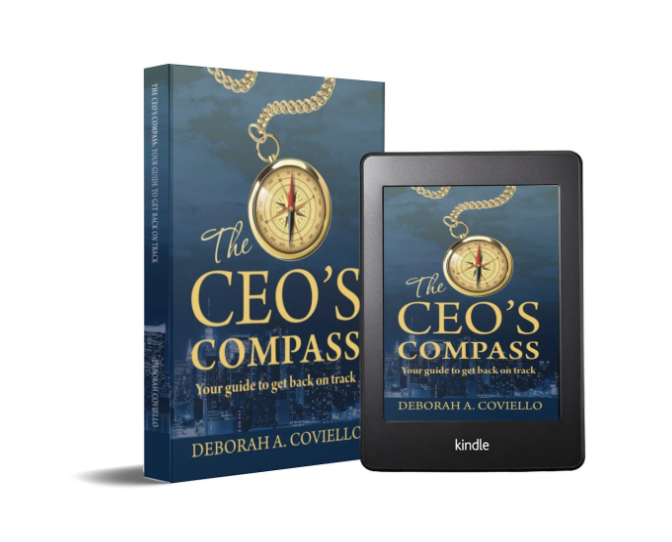
For more resources, you can listen to The Drop In CEO Podcast or check out my book The CEO’s Compass will help you get on track in days not months. 

No alt text provided for this image

Resources

Good Reads

Essentials of a Successful Marriage by Abiola Soremekun 

What would you say if I suggested that what we learn from marriages is directly applicable developing the leaders of tomorrow? I’m pleased to know Abiola Soremekun who writes a simple but powerful book on marriage, but what can we learn from it for other pursuits? She discusses Listening, communicating and trust among other topics; so relevant to all relationships; especially those in the workplace or our businesses. Why would we treat people in our care any differently than those we care deeply about? Think about it and I’d love to know your thoughts!

Good Music

Pianist Marlowe Carruth’s Eternal Light – today I am inspired by finding new ways to connect with senior leaders and those that are in your care. I’m developing offers to help you struggle less and guide leaders of today and tomorrow. When I listen to this piece, it provides me hope that my work will have a lasting impact on those who I share the best insights I can provide. 

Good Advice

“Sometimes you feel like trial and error is a rite of passage. But you don’t get any extra points at the end of your life for having more trial and error or more pain.”

 –Ben Wolf

For more inspiration, Listen & Subscribe to The Drop In CEO Podcast

If you love the podcast, please write a review. We are offering a quick tutorial to make it easy to leave a review.

Read More
Natalie Faye | Getty Images

Had I followed the advice of my high school guidance counselor to go to a local community college, I would not be writing this article to you now. I was seen as average and had I accepted that narrative, my destiny would have been sealed; at least for a while. This assumption that a career path or goal isn’t designed for you, whether due to societal norms or the expectations of others, is an absolute guarantee you will not accomplish your goal.

Have you ever said you can’t do something simply because you don’t believe you have the skills to achieve more? You say you’re shy. You wish you could speak as eloquently as others. You wish you had a mentor to help guide your career. Within these symptoms of self doubt, have you ever thought about how you could be the one sabotaging your career? 

While this may sound harsh, the difference between what is vs. what could be is taking personal accountability for your career. 

From Personal Sabotage to Personal Accountability

When others suggested that I target “average” schools when entering college, I had a choice. The easy way would be to apply to schools that were well within my capability, making everyone else could feel good about getting me in. However, that narrative was not sitting right with me because it violated my values of excelling and needing to get into Tier I or II schools to increase my chances of a good paying job and financial freedom. The narrative kept coming from adults “watching out” for me that I should send many applications to all colleges including average and Tier I & II just to make sure I got into school. The underlying narrative was they didn’t think I was good enough, but I did not listen. I believed I was smart enough and had to try. 

Having sent out many, I got into Rensselaer Polytechnic Institute, Stevens Institute of Technology, Rutgers School of Engineering, Miami University school of Engineering and Boston University School of Engineering. Several of these were Tier II schools and in the end Rensselaer became my home for four years as I earned a degree in Biomedical Engineering. 

The key is to evaluate the value of what others say vs. what you think. The key word is “think.” So often as leaders we simply “do” what others expect and then those actions turn into ongoing behaviors. Those behaviors return a feedback signal to your brain that this is who you are. When we think before we do and have good decision logic, we are accountable for our actions. So how do we turn this wisdom into action?

Framework for Transitioning Personal Sabotage to Personal Accountability

  • List your limiting beliefs
  • Qualify which ones did you assume and which ones did others impart on you
  • List approximately when did you assume the limiting belief (i.e as a child, college, adult) and list if it is still relevant or not?
  • For limiting beliefs imparted by others, ask if they are still relevant or not?
  • For anything left over as still relevant, ask yourself this question:

“If I don’t change my limiting beliefs, am I okay with the regret of not knowing what is possible?”

If the answer is no, you’ve made the first step in moving your career forward. I trust you can do this, but perhaps a guide can provide you the support you need.

Building new skills takes practice and I want to be there for you. We cover this framework in our Drop In C-Suite Academy which is still accepting students for enrollment. If you would prefer a 1-2-1 approach, I can also offer my coaching services. 

For more information about The Drop In C-Suite Academy (CS)  dedicated to the aspiring C-Suite leader, simply register to get on the waitlistemail me or connect with me for a quick chat. I can’t wait to help you be successful and reach your goals!

For more resources, you can listen to The Drop In CEO Podcast or check out my book The CEO’s Compass will help you get on track in days not months.

No alt text provided for this image

Resources

Good Reads

Climbing The Right Mountain: Navigating the Journey to An Inspired Life by Tony Martignetti – I finished this read during vacation and it validates the need to follow what your heart says about purpose. When we only do what is expected, over the long term, it can take a toll on your mind and body. Take the time to invest in yourself and realize what your fully capable of doing. 

Good Music

Solas – Vital Mental Medicine / The Pullet – This is a very fast pace Irish / American song that is filled with energy, dueling instruments and tension. I reflect upon this piece as how one will feel as they move from a place of holding themselves back to their breakout potential. 

Good Advice

This week, I wanted to source a quote that aligned with this article and found in this quote from Steve Jobs: 

No alt text provided for this image

For more inspiration, Listen & Subscribe to The Drop In CEO Podcast

P.S. If you love the podcast, please write a review. We are offering a quick tutorial to make it easy to leave a review

Read More

Rushing to my daughters Lacrosse game, I had just finished a conference call. I looked to find my husband and once seated proceeded to check my email. Three years ago, this was a common way of life for me. I hustled to get ahead and while that is necessary as you move up the ladder, it can be all consuming. It cuts into your time with family, community and yourself and we constantly struggle with that word “balance.”

The experts have been lying to you

If you try to juggle three balls in the air and two more are thrown at you, the high performer in you will get resourceful and find ways to juggle all five. The issue comes when you do this while driving to pick up the kids and you’re calling Alexa to start dinner.

We’re smart and resilient and find ways to balance everything. And when we’re done juggling, we sit down in the evening with our significant other saying to ourselves we’re spending quality time, when in reality our mind is juggling the work that did not get done and all that must be done the following day. This is not balance, but the lie we’ve been told is to hustle and find balance at the same time. In reality, we lack the skills to prioritize our time and filter out those things that do not serve us. This is the root of why we don’t hold ourselves accountable when it comes to our career. 

The career conundrum

Doing more to get ahead is what is programmed into our minds. When we get very clear on whether we need to respond to every email, attend every meeting and generate every report, we soon realize that maybe only 30% of what we do really matters. When I say what matters, it includes the most important work you do at work in service to your managers & the business and might contribute to your career aspiration as well. The rest of what you do is busy and necessary, but clearly does not move your career forward. So what do you do? You need to do the work that is part of the job description. Or do you? I suggest, you have your priorities out of alignment and this is your opportunity to prioritize your career and be personally accountable for getting ahead in your career.  

Framework for prioritization and accountability

We need to assure we serve the people we are employed with, so prioritization of what is important is key. Only then will we find the time to prioritize our career aspirations and hold ourselves accountable. In order to do this, we need a framework and a filtering system to stop doing the work that is not value added and start being accountable for your career:

  • What are the things you can stop doing that no one would notice?
  • What are the things you do frequently and with no risk?
  • What are the things you could either do more efficiently or could you delegate?
  • How many hours did you gain back in your week?
  • What are the 5 things you need to do to start doing to get ahead in your career?
  • How  much time do you need each week to do just one thing to move forward?
  • Spend some time visualizing where you want to go and save that image in your head
  • Prioritize the 5 things you need to do to achieve that image you see
  • Schedule to do one thing each week
  • Make it visual and when you’re off track, use a system to get back on track
  • Look at what you did in those 5 weeks and celebrate you moving forward with your career. 

When we learn to discipline ourselves in creating a plan, prioritizing it and achieving key milestones, we’ve learned an important skill called Strategic Planning. If you want to move ahead in your career, demonstrating you have the skills to plan, prioritize and exercise accountability will make you very desirable in your next role. 

The teacher is also the student

I am always swinging between balance and accountability. I find that often when I free up my schedule to do the things that matter, they quickly fill up with new ideas and pursuits. I’m just wired that way because there is so much I accomplish. And then things like breaking my ankle a year ago or simply taking a cruise, remind me to slow down and put things in perspective. I just returned from a vacation and I’ve peeled away yet again those activities that do not matter. I’m juggling less balls in the air and I’m spending more time with you. I care about you and I want you to juggle and struggle less. 

Building new skills takes practice and I want to be there for you. We cover this framework in our Drop In C-Suite Academy which is still accepting students for enrollment. If you would prefer a 1-2-1 approach, I can also offer my coaching services. 

For more information about The Drop In C-Suite Academy (CS)  dedicated to the aspiring C-Suite leader, simply register to get on the waitlistemail me or connect with me for a quick chat. I can’t wait to help you be successful and reach your goals!

For more resources, you can listen to The Drop In CEO Podcast or check out my book The CEO’s Compass will help you get on track in days not months.

No alt text provided for this image

Resources

Good Reads

Taking the week off because  I’m focusing on connecting with you for the Drop In C-Suite Academy. I’ll come back to you next week with a favorite book I’d recommend.

Good Music

This week, I was so inspired by the topic that I did not need music to help motivate me. I have found recently when I walk my dog Reagan in the cool spring air that listening to the natural music of birds and the silence is all that I need to set me up for the rest of the day. (If you listen to my podcast, Reagan makes a periodic appearance!) 

Good Advice

I love this quote from my podcast guest this week. I’ve learned that the journey is better when you travel with friends. Great advice from James:

“Regardless of your level in the organization, I think there’s always an opportunity to have advisors who can help you stay authentic and stay vulnerable.” 

–James Wetrich

Listen and subscribe now

If you love the podcast, please write a review. We are offering a quick tutorial to make it easy to leave a review

Read More

I raised my hand and said “I’ll go,” as troubles were brewing in another plant. “I’d love to see if I could help out.”

While I was satisfied with my work as an Operational Excellences expert, I knew I had more to offer and wanted to ultimately get a regional role. Volunteering to travel to another facility was the first step in moving my career forward with this company. Having been a high performer without the support of my manager to help move me forward, I knew I had to do something and STOP being the best kept secret in my workplace. 

If you’ve ever hoped to get recognized and promoted only to see others pass you by, you know what I mean. We are brought into organizations to learn and provide value. Sometimes when we do our job well, our managers have peace of mind and don’t seek to create waves and move us along. In my story, I ultimately achieved a Regional Operational Excellence role, but not without honing a process that helped me to move forward. I am pleased to distill the framework for you.

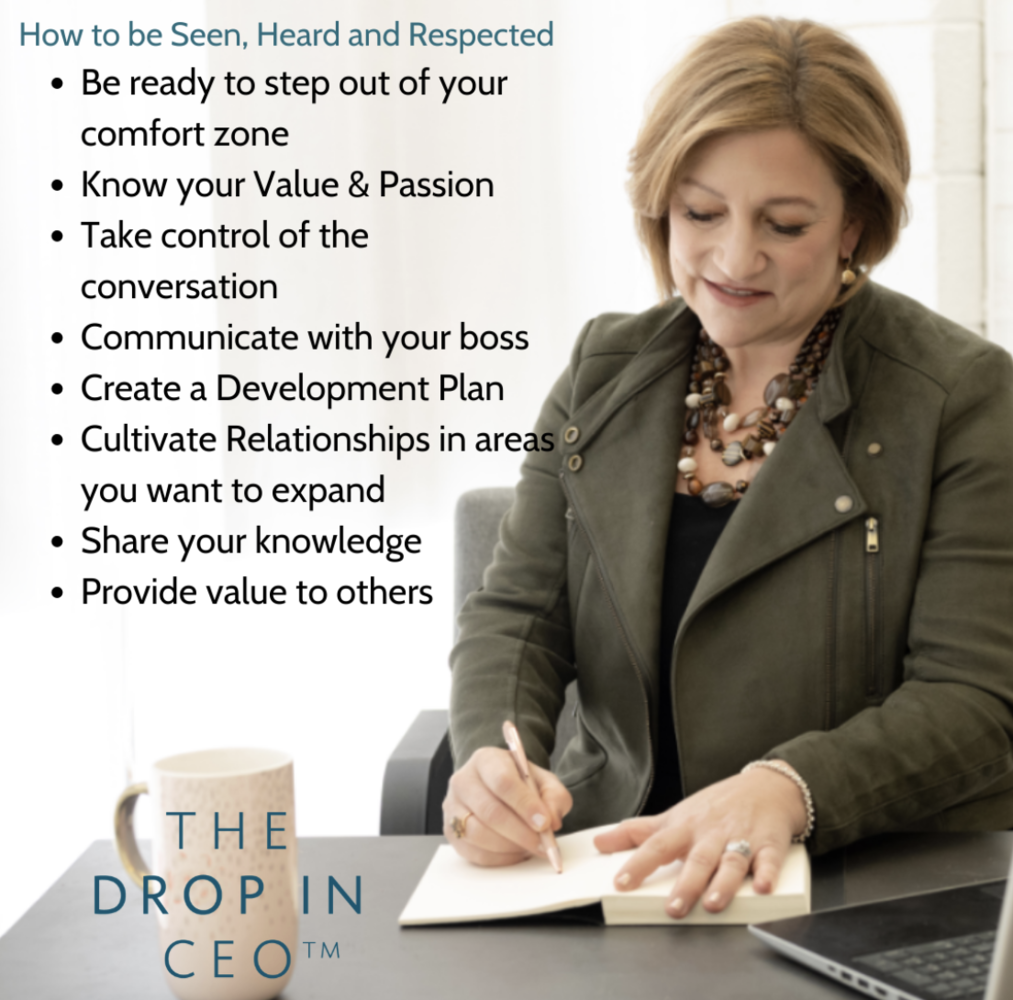
The formula for being Seen, Heard & Respected

  • Start by asking yourself, are you willing to go outside your comfort zone?

It could be you that is holding yourself back and being the “best kept secret.” Maybe you are comfortable and that’s okay. But maybe you’re itching to get ahead, but never had the framework to start moving you from being a secret and putting yourself out there.

  • Know what you’re known for and be able to articulate your value

Know what you’re passionate about and merge what you are good into what you’re passionate about.

  •  Keep an open dialog with your boss.

Let them know you’re interested in doing more and seek guidance with good people to connect with and have 1-2-1’s.You don’t want to do this behind their back. For some, they may see this as a threat depending on their mindset. You want to assure them, you will continue to do the work and meet their needs first.

  • Create a development plan for you to do some work in other areas a few hours a week
  • Cultivate those relationships and meet with them periodically.

Ask what challenges are in their areas. How can you help? Ask to share your work with other teams to spark ideas on how they can leverage your skills and add to what they are doing. Invite your boss and make sure they have a chance to shine or have a piece of the recognition.

No alt text provided for this image

I hope you found these tips helpful and encourage you to write down your own plan and see if it makes sense for you. Then take one action a week to move the plan forward. Always keep moving forward! 

As I finish this article for you, just know I see you in front of me, seeking guidance to help you with your career. Just yesterday I met someone new and I hope in our 30 minute conversation I was able to change the trajectory of that talented individual. 

Building new skills takes practice and I want to be there for you. We cover this framework in our Drop In C-Suite Academy which is still accepting students for enrollment. If you would prefer a 1-2-1 approach, I can also offer my coaching services. 

For more information about The Drop In C-Suite Academy (CS)  dedicated to the aspiring C-Suite leader, simply register to get on the waitlistemail me or connect with me for a quick chat. I can’t wait to help you be successful and reach your goals!

For more resources, you can listen to The Drop In CEO Podcast or check out my book The CEO’s Compass will help you get on track in days not months. 

No alt text provided for this image

Resources

Good Reads

You Can’t Google It!: The Compelling Case for Cross-Generational Conversation by Phyllis Weiss Haserot – I am grateful to know Phyllis after being a guest on her podcast soon to be released as well as having her on mine. Her work is around helping the generations to better understand, communicate  and collaborate. I finally finished his read while on vacation last week and it gives me hope that we will all be moving forward together vs. at odds with each other. Check out her work and connect with her. She’d love to hear from you. 

Good Music

Heroic Opportunities by Soundcritters – this piece is so motivating as you venture into new tasks or initiatives; consider this song to get you in the right frame of mind. My copy writer and brand amplifier Amanda Lund waits patiently for me to write my weekly post. Having inspirational music quickly gets you focused and back on track! Enjoy!

Good Advice

“If you’ve never taken the time to have a conversation with an individual and understand the deepest gifts they have to bring, then who are we to judge them as being difficult?”

-Deb Coviello

Listen and subscribe now

P.S. If you love the podcast, please write a review. We are offering a quick tutorial to make it easy to leave a review.

Read More

“I’m sorry, but we have to dismiss you.” I looked across the table at the employee I was letting go saw their face fall. They replied, “just tell me what to do and I’ll do it!”

I dreaded that moment and felt unprepared for the conversation. As leaders, we only want to think about the growth side of teamwork, the nurturing and guiding aspects of creating team partnerships.

It’s when we’re faced with the decision to end a work relationship that waters get murky. Far deeper than this transaction, I didn’t have a framework to have difficult conversations about their performance that led up to this event. I avoided conversations that discussed the gap in performance and had a forward-facing plan to close those gaps. In that way, the old phrase of “having a difficult conversation,” moves to one to have a conversation for alignment. 

Having a conversation for alignment

In my upcoming episode 218 releasing Friday 4/15, I take the anguish out of difficult conversations and give you a map to align on gaps and move forward together. They often don’t teach this to you in school and if you’re lucky, maybe you’ll see someone model this behavior. But until you do, the task is mysterious and scary for which you may be unprepared.

In my Drop In C-Suite Academy, we discuss the below framework and then we practice until you build the skill you need. It starts with:

  • Identify the person you want to align with
  • Visualize the outcome
  • Discuss the gap
  • Seek to understand why there is a gap
  • Go first in  offering an action you can take to close the gap
  • Ask for them to commit to an action and close the gap
  • Move forward together and repeat.

A key component of this framework is to “visualize the outcome.” Once we start with the end in mind, every step we take moves us one step closer to what we want to achieve. It also allows us to be a servant leader; going first to offer an action you can take from a personal accountability perspective. It could be in sharing information, setting up more frequent 1-2-1’s with them, setting up a call with a key stakeholder; anything that shows your commitment to the relationship.

The other key element on why this works is it takes away the “mystery of the unknown” of having a difficult conversation to one that slows down the process. It enables you to  exchange information and move through what is perceived as difficult to one that is productive. 

Now think of a situation you would like to try this on. Take the key points and write them down so you have them when you have that conversation for alignment. As for myself; I recognize difficult conversations now as opportunities to close gaps. I find 80-90% of the time these conversations build greater understanding and it’s no longer about perception, but about realities of aligning with other people. 

The guide below can be useful. Click on the image to also download it for your use.

Building new skills takes practice and I want to be there for you. We cover this framework in our Drop In C-Suite Academy which is still accepting students for enrollment. If you would prefer a 1-2-1 approach, I can also offer my coaching services. 

For more information about The Drop In C-Suite Academy (CS)  dedicated to the aspiring C-Suite leader, simply register to get on the waitlistemail me or connect with me for a quick chat. I can’t wait to help you be successful and reach your goals!

For more resources, you can listen to The Drop In CEO Podcast or check out my book The CEO’s Compass will help you get on track in days not months. 

No alt text provided for this image

Resources

Good Reads

Climbing The Right Mountain: Navigating the Journey to An Inspired Life by Tony Martignetti – I started this book a month ago, but now that I’m officially signing off on vacation shortly, I’m finally enjoying his rich words and validation for the work I’m doing now. I sincerely hope you get a copy and see if you are climbing the right mountain. 

Good Music

New beginning – Luke Faulkner – 

I share this song with you because of it’s special meaning to me. New Beginning – I’m now sitting at our friends home in Naples Florida before departing on a much needed vacation and cruise. It was hear a little more than a year ago, I was finishing my book “The CEO’s Compass” and putting out messages and insights for the world to receive. I know it was the book I needed to write and the beginning of having a broader impact. Similarly, the Drop In C-Suite Academy is also a new beginning. I’m speaking to students and building my enrollment for my next cohort. Such talent and such wasted skills because we’ve not helped them to evolve the ones needed. We elevate their technical skills & experience; all critical to doing the transactional work. We miss helping them to message their voice and to influence the future. Today, this month, this year is a New Beginning for all who wish to take their career to the next level. Stay tuned for more about the cohort. 

Good Advice

“There’s always two leaders in every organization, the ones who have the title and the ones who have the influence. Ideally, we want them to be the same person, but that’s not always the case.”

 –John Robertson

Listen and subscribe now

P.S. If you love the podcast, please write a review. We are offering a quick tutorial to make it easy to leave a review.

Read More